
Health insights
C-Section Delivery: Why It Is Done, What Happens and How to Recover
Why a C-section is done, what happens during surgery, how long recovery takes, and warning signs after delivery. A simple guide for mothers.
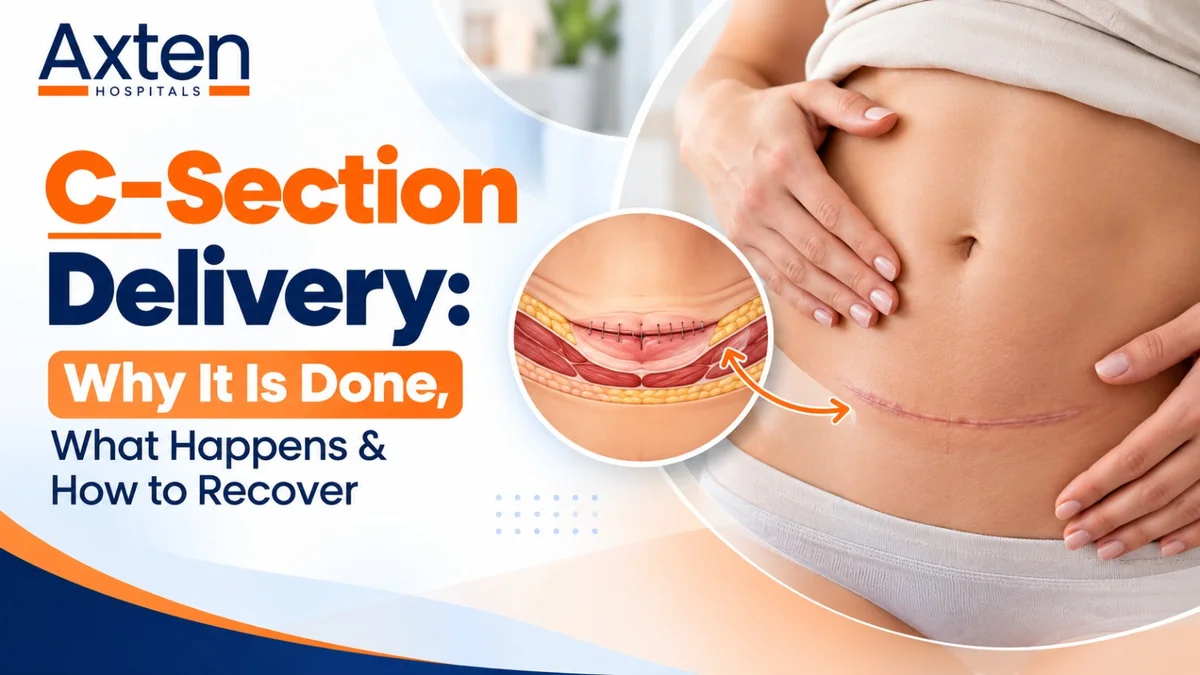
Planned or sudden, a C-section can bring up a lot of worry. Why is it needed? Will it hurt? How long before I'm back on my feet? Here are plain answers, so you know what to expect before and after your baby is born.
What is a C-section?
A C-section (caesarean) delivers the baby through a cut in the lower belly and another in the womb. Doctors also call it LSCS, short for lower segment caesarean section. The cut is usually low and sideways, just above the pubic hair line.
When there's a medical reason, a C-section can save lives. When there isn't, it brings no extra benefit to mother or baby, and it is still major surgery. The World Health Organization makes the same point.
Why is a C-section done?
Planned
-
The placenta covers the opening of the womb (placenta previa)
-
The baby is feet-first (breech) or sideways and can't be turned
-
You've had a C-section or major womb surgery before, and a vaginal birth isn't advised
-
You're carrying twins or more and the position makes vaginal birth unsafe
-
A health condition in the mother or baby makes labour risky
Emergency
Sometimes the decision comes during labour: labour isn't progressing despite good contractions, the baby's heartbeat shows distress, the cord slips down before the baby, the placenta separates early or there is heavy bleeding, or the baby is too big to pass through the birth canal. In an emergency the team moves fast. Ask your doctor to explain the reason once things are calm.
What happens during the surgery
-
Preparation. A drip goes into your arm, a thin tube (catheter) into your bladder, and the belly is cleaned.
-
Anaesthesia. Most women have a spinal or epidural injection. You're awake but numb from the waist down. General anaesthesia is used in some emergencies.
-
Delivery. The baby is usually born within about 10 minutes of starting. You may feel pulling and pressure, but not sharp pain.
-
Meeting your baby. If you and the baby are well, you can often hold your baby soon after, including skin-to-skin contact.
-
Closing. The womb and belly layers are stitched. The whole operation usually takes 30 to 60 minutes.
-
Recovery room. You're watched closely for a few hours.
Ask in advance whether your partner or a family member can be with you in the theatre.
Recovery in hospital
You'll usually stay 2 to 4 days. You'll be helped to sit up and walk within the first day, which lowers the risk of blood clots and gets your bowels working. Pain relief is given, so tell the nurse if it isn't enough. The catheter comes out within a day or so. Breastfeeding can start soon, and lying on your side or the "football hold" keeps the baby off your wound.
Recovery at home (6 to 8 weeks)
-
Rest when the baby sleeps, and take short walks every day.
-
Hold a pillow against your belly when you cough, laugh or get up.
-
Don't lift anything heavier than your baby for about 6 weeks.
-
Keep the wound clean and dry. Pat it dry after a shower and don't scrub.
-
Vaginal bleeding is normal for up to 4 to 6 weeks and slowly gets lighter.
-
Drive only when you can brake hard without pain, often 2 to 6 weeks. Check your doctor's advice and your car insurance.
-
Wait for your doctor's approval before abdominal exercises.
-
Wait for intimacy until the bleeding has stopped and you feel ready.
What to eat
There is no special C-section diet. Balanced home-cooked food is best: protein (dal, eggs, paneer, curd, chicken, fish), iron-rich food (leafy vegetables, dates, pulses), and fibre from fruit, vegetables and whole grains to prevent constipation, which can strain the wound. Drink plenty of fluids, especially if you're breastfeeding. Water isn't harmful after surgery. Follow your doctor's advice on iron and calcium supplements.
Warning signs after a C-section
Call your doctor or hospital the same day if you have:
-
Fever of 38 °C (100.4 °F) or higher
-
A wound that is red, hot, swollen, leaking or opening up
-
Bleeding that soaks a pad in an hour, or large clots
-
Foul-smelling vaginal discharge
-
Pain, swelling or redness in one calf
-
Pain that is getting worse instead of better
-
Burning or difficulty while passing urine
-
Very low mood, hopelessness, or thoughts of harming yourself or the baby
Get help now: Go to the emergency room now if you have chest pain, trouble breathing, a sudden severe headache or fainting. These can be signs of a blood clot or another serious problem.
Risks
A C-section is generally safe, but like any operation it has risks: infection of the wound or womb, bleeding, blood clots and, rarely, injury to the bladder or bowel. Babies born by C-section before 39 weeks without a medical reason can have short-term breathing trouble. Several C-sections can raise the risk of placenta problems in later pregnancies. Your doctor will talk these through with you.
Normal delivery after a C-section
Many women with one earlier low-cut C-section can safely try a vaginal birth, called VBAC. It doesn't suit everyone, and it should be planned in a hospital that can do an emergency C-section. Raise it early in your next pregnancy.
Common questions
Will I feel pain during the surgery? You'll be numb, so you shouldn't feel pain, though you may feel pressure and pulling.
When will the scar fade? It is red or pink at first and fades slowly over many months. Ask your doctor before using any scar cream.
Can I breastfeed after a C-section? Yes. Most mothers can. Ask the nurse to help you find a comfortable position.
Have questions or want to see a specialist? For appointment and queries, call 8156929292. AXTEN HOSPITALS - HONEST SURGERY, HONEST CARE.