Laser Piles Treatment

LaserSpecialist surgeons onlyCashless insuranceFree follow-ups
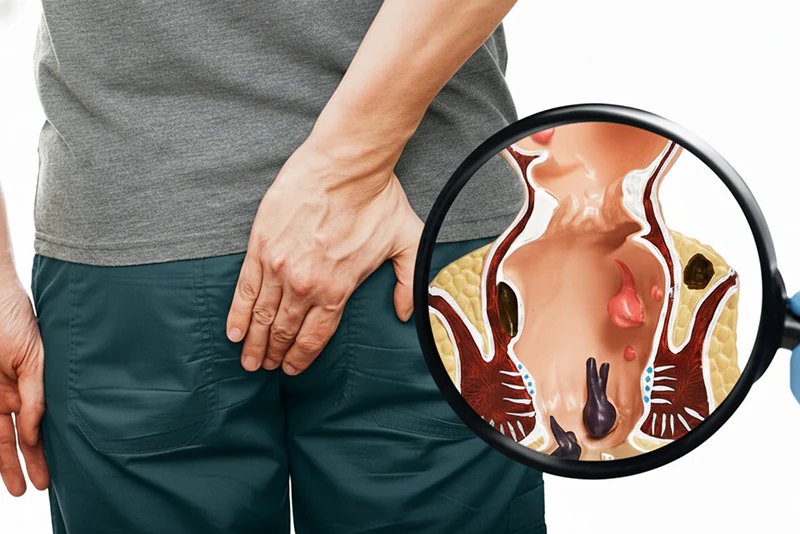
Illustration explaining piles and haemorrhoids
Piles Treatment - specialist-led treatment at Axten

Piles, medically known as haemorrhoids, are swollen and inflamed blood vessels in and around the anus and lower rectum. They develop when repeated straining, chronic constipation, prolonged sitting, pregnancy or a low-fibre diet puts pressure on these veins. Piles are extremely common in India - most adults experience them at some point - and they are graded from I to IV depending on how far they protrude.

Internal piles form inside the rectum and usually cause painless bleeding, while external piles form under the skin around the anus and can be painful, especially when a clot forms inside them. Early-grade piles often respond to diet changes and medicines, but higher grades typically need a procedure for lasting relief.

At Axten Hospitals, experienced proctology specialists treat piles with advanced laser technology - a daycare procedure with minimal pain, no large cuts and quick return to routine. You get one honest, all-inclusive price quoted upfront, with zero surprise billing, cashless insurance support and free post-surgery follow-ups.

Honest all-inclusive price₹45,000 - ₹75,000 (all-inclusive, varies by grade & city)See full cost breakdown

Consult for Piles Treatment

Share your details - a care coordinator calls you back within minutes.

Country code +91 selected.

100% confidential · No spam · Honest all-inclusive quotes

Symptoms of Piles (Haemorrhoids)

  • Bright red bleeding during or after passing stool
  • A lump or swelling felt near the anal opening
  • Itching and irritation around the anus
  • Pain or discomfort while sitting or passing stool
  • Mucus discharge after bowel movements
  • A feeling of incomplete evacuation
  • Soiling or staining of undergarments

Risks of delaying treatment

  • Chronic blood loss from untreated bleeding piles can cause anaemia, weakness and fatigue
  • Grade II piles can progress to Grade III or IV, where they permanently prolapse outside the anus
  • A prolapsed pile can become strangulated - its blood supply gets cut off, causing severe pain and tissue death
  • Persistent symptoms may mask more serious conditions such as fissures, fistulas or colorectal polyps that need timely diagnosis

How is piles (haemorrhoids) diagnosed?

Diagnosis begins with a discussion of your symptoms and a gentle physical examination. The doctor inspects the anal area and may perform a digital rectal examination to feel for internal swellings. For internal piles, a proctoscopy - a quick look inside the anal canal using a small lighted tube - confirms the grade of the piles.

If you have bleeding with other warning signs, or if you are above 45, the doctor may advise a sigmoidoscopy or colonoscopy to rule out other causes of rectal bleeding such as polyps or fissures. At Axten, all recommended tests are explained clearly and included transparently in your treatment estimate.

Benefits of laser treatment

  • No cuts or stitches - the laser seals piles from within
  • Daycare procedure; most patients go home the same day
  • Significantly less post-operative pain than conventional open surgery
  • Faster recovery - back to work in 2 to 3 days for most patients
  • Minimal bleeding during and after the procedure
  • Very low risk of damage to the anal sphincter muscles

Types of piles treatment

Non-surgical options

  • Dietary and lifestyle modification - high-fibre diet, adequate water and stool softeners for Grade I piles.
  • Medication - ointments, suppositories and vein-strengthening tablets to reduce swelling and discomfort.
  • Rubber band ligation - a small band placed around an internal pile cuts off its blood supply so it shrinks and falls off.
  • Sclerotherapy - an injection that shrinks small internal piles by scarring the swollen vessel.

Surgical & procedural options

  • Laser haemorrhoidoplasty - laser energy shrinks and seals the pile mass from inside with no cuts, the preferred modern option.
  • Stapled haemorrhoidopexy (MIPH) - a circular stapler repositions and fixes prolapsed piles higher in the anal canal.
  • Open haemorrhoidectomy - conventional surgical removal of large Grade IV piles, reserved for select cases.
Piles treatment process
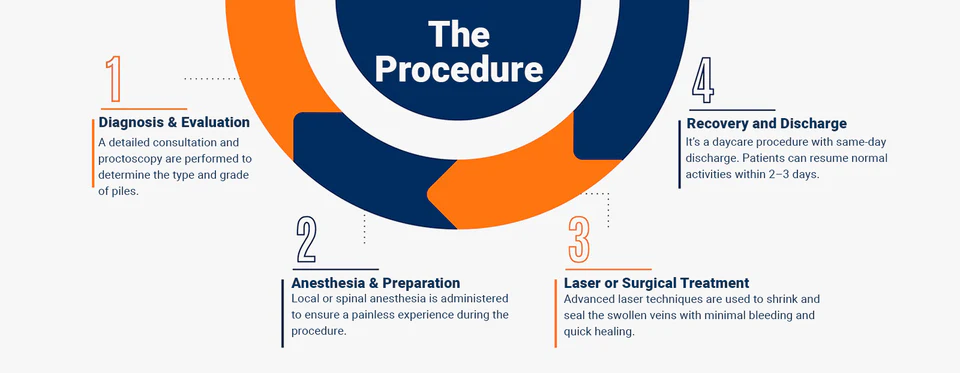
How piles treatment is performed

How the procedure is performed

Laser piles treatment is performed under short spinal or general anaesthesia, so you feel no pain during the procedure. After the anal canal is gently examined, a fine laser fibre is inserted into each pile mass through a tiny opening. Controlled laser energy is delivered inside the haemorrhoid, sealing the abnormal blood vessels and shrinking the swollen tissue from within.

Because there is no cutting or removal of tissue, there are no stitches and no open wound. The entire procedure usually takes 20 to 30 minutes depending on the number and grade of piles being treated.

Most patients walk comfortably within a few hours and are discharged the same day or the next morning. Your Axten care coordinator arranges everything - admission, insurance paperwork and discharge - so you can focus only on recovery.

Recovery & aftercare

  • Most patients resume desk work within 2 to 3 days of the procedure
  • Take warm sitz baths two to three times daily to soothe the area and keep it clean
  • Eat a high-fibre diet with plenty of fluids to keep stools soft
  • Avoid straining on the toilet and do not sit for very long periods in the first week
  • Take prescribed stool softeners and pain relief exactly as advised
  • Attend your free Axten follow-up visits so the surgeon can confirm complete healing

Why Axten

Care that doesn't stop at the operating table

Every piles treatment package includes your surgeon's fee, OT and anaesthesia charges, hospital stay, standard medicines and post-procedure follow-ups - quoted once, in writing, before you decide.

  1. Talk with our experts

    Share your reports on a free call. A specialist reviews your case the same day.

  2. Honest fixed quote

    Receive one all-inclusive package price in writing - before you commit to anything.

  3. Insurance & paperwork

    Our insurance desk secures cashless approval and completes every formality.

  4. Your procedure

    A senior specialist operates at a partner hospital near you, on your scheduled date.

  5. Recovery & follow-ups

    Free follow-up consultations and recovery monitoring until you are fully healed.

The Axten standard

Why patients choose Axten for piles treatment

For piles treatment, Axten focuses on the parts patients usually find stressful: confirming the right specialist, explaining the procedure clearly, locking the package price in writing and keeping recovery follow-ups organised.

NABHstandard partner hospitals
100%written package quotes
24x7care helpline access

Senior surgeon review

Your case is reviewed for clinical fit before a date or package is suggested.
One written package

Surgeon, OT, anaesthesia, stay, standard medicines and follow-ups are itemised upfront.

Insurance handled early

Cashless eligibility, TPA paperwork and EMI options are checked before admission.

Coordinator-led recovery

A care coordinator keeps follow-ups, reports and recovery instructions organised.

FAQs about piles treatment

Is laser piles treatment painful?

No. The procedure itself is done under anaesthesia, so you feel nothing. Because the laser works without cuts or stitches, post-operative pain is far less than with conventional surgery. Most patients manage comfortably with simple oral painkillers for a few days and report only mild soreness while sitting or passing stool during the first week.

How many days of rest are needed after laser piles surgery?

Most patients are discharged the same day and can resume light activities within 24 to 48 hours. Desk jobs can usually be resumed in 2 to 3 days, while heavy lifting and strenuous exercise should wait about two weeks. Your Axten surgeon will give you a personalised recovery plan at discharge, and follow-up visits are free.

Can piles come back after laser treatment?

Recurrence after laser haemorrhoidoplasty is low - roughly 5 to 10 percent over several years - and much of that risk depends on lifestyle. Maintaining a high-fibre diet, drinking enough water, avoiding straining and not delaying the urge to pass stool greatly reduce the chance of piles returning after treatment.

What is the cost of laser piles treatment in India?

At Axten Hospitals, laser piles treatment typically costs ₹45,000 to ₹75,000 depending on the grade of piles and your city. This is an honest all-inclusive price covering surgeon fees, laser charges, anaesthesia, room, medicines and follow-ups - with zero surprise billing. Cashless insurance and 0% EMI options are available. Call 8156-92-92-92 for an exact quote.

Which grades of piles can be treated with laser?

Laser treatment works best for Grade II and Grade III piles, and for Grade I piles that keep bleeding despite medicines. Very large Grade IV prolapsed piles may need stapler or conventional surgery, which your Axten specialist will discuss honestly after examination. The right procedure is always chosen based on your grade, symptoms and overall health.

Is piles surgery covered by health insurance?

Yes. Piles surgery, including laser haemorrhoidoplasty, is covered by most Indian health insurance policies once any initial waiting period is over. Axten Hospitals offers cashless facilities with all major insurers, and our dedicated care coordinators handle pre-authorisation and paperwork for you. If you are uninsured, 0% EMI payment plans are available.

Can piles be cured without surgery?

Early Grade I piles often improve with a high-fibre diet, plenty of fluids, stool softeners and medicated creams. However, once piles reach Grade II or beyond, medicines only control symptoms temporarily - the swollen tissue itself does not disappear. A short laser procedure offers a lasting solution with minimal downtime when conservative care stops working.

How do I know if my bleeding is from piles or something serious?

Piles typically cause painless, bright red bleeding seen on the stool surface or toilet paper. Dark blood mixed with stool, unexplained weight loss, altered bowel habits or a family history of colon cancer need further evaluation. Never self-diagnose rectal bleeding - a quick proctoscopy at Axten gives a clear answer, usually in a single visit.

Ready to discuss piles treatment?

Free specialist consultation and an honest all-inclusive quote - no obligation.