Laparoscopic Fibroid Removal (Myomectomy)

LaparoscopicSpecialist surgeons onlyCashless insuranceFree follow-ups
Fibroid removal and myomectomy overview
Fibroid Removal (Myomectomy) - specialist-led treatment at Axten

Uterine fibroids (myomas) are non-cancerous growths of the muscle wall of the uterus, extremely common in women between 30 and 50 years of age. Many cause no trouble, but fibroids that lead to heavy periods, pelvic pain, pressure symptoms or difficulty conceiving deserve treatment. Their size ranges from a pea to larger than a melon, and they may be single or multiple.

Myomectomy is the surgical removal of fibroids while preserving the uterus - the preferred operation for women who wish to retain fertility or simply keep their womb. Performed laparoscopically through three or four keyhole incisions, it offers minimal pain, little blood loss, a one-to-two-day hospital stay and strong, layered repair of the uterine wall.

Axten Hospitals' specialist laparoscopic gynaec surgeons plan each myomectomy on detailed imaging, quote one honest all-inclusive price with zero surprise billing, and support you with cashless insurance, 0% EMI, a dedicated care coordinator and free post-surgery follow-ups until you are fully back on your feet.

Honest all-inclusive price₹70,000 - ₹1,40,000 (all-inclusive, varies by fibroid number, size & city)See full cost breakdown

Consult for Fibroid Removal (Myomectomy)

Share your details - a care coordinator calls you back within minutes.

Country code +91 selected.

100% confidential · No spam · Honest all-inclusive quotes

Symptoms of Uterine Fibroids

  • Heavy or prolonged periods, often with clots
  • Anaemia - tiredness, breathlessness, pale skin
  • Pelvic pain or a dragging heaviness in the lower abdomen
  • A firm lump or visible swelling of the lower belly
  • Frequent urination from pressure on the bladder
  • Constipation or backache from pressure on the bowel and spine
  • Difficulty conceiving or repeated miscarriage in some women

Risks of delaying treatment

  • Fibroids typically grow with time, turning a simple keyhole operation into complex open surgery
  • Ongoing heavy periods drive haemoglobin dangerously low, sometimes requiring blood transfusion
  • Untreated fibroids can distort the uterine cavity, reducing fertility and increasing miscarriage risk
  • Large fibroids pressing on bladder, bowel and ureters can silently affect kidney drainage

How is uterine fibroids diagnosed?

A pelvic examination followed by ultrasound - abdominal and transvaginal - identifies the number, size and position of fibroids. Blood tests assess haemoglobin, thyroid function and surgical fitness. For multiple or large fibroids, or those near the uterine cavity, MRI provides a precise map that guides the surgical plan.

Where fibroids bulge into the uterine cavity, a hysteroscopy may be done to view them directly. Your gynaecologist correlates symptoms, fertility plans and imaging to recommend the right option - medicines, hysteroscopic removal, laparoscopic myomectomy or, when family is complete and disease is extensive, hysterectomy.

Benefits of laparoscopic treatment

  • Removes fibroids while preserving the uterus and future fertility
  • Keyhole surgery means tiny scars, minimal pain and low blood loss
  • Hospital stay of just one to two days for most patients
  • Heavy bleeding, pressure and pain relieved at the root cause
  • Layered suturing of the uterine wall supports safe future pregnancy
  • Return to work and normal routine within two to three weeks

Types of fibroid removal (myomectomy)

Non-surgical options

  • Hormonal therapy - tablets, injections or hormone-releasing IUDs that reduce bleeding and temporarily shrink fibroids.
  • GnRH agonist injections - shrink large fibroids and correct anaemia before planned surgery.
  • Uterine fibroid embolisation (UFE) - a radiologist blocks the fibroid's blood supply through a tiny groin puncture in selected cases.

Surgical & procedural options

  • Laparoscopic myomectomy - fibroids in the uterine wall or outer surface are removed through keyhole incisions.
  • Hysteroscopic myomectomy - fibroids bulging into the cavity are shaved away through the vagina with no cuts at all.
  • Open myomectomy - reserved for very large or numerous fibroids needing extensive reconstruction.
  • Hysterectomy - removal of the uterus, considered only when family is complete and fibroids are extensive.
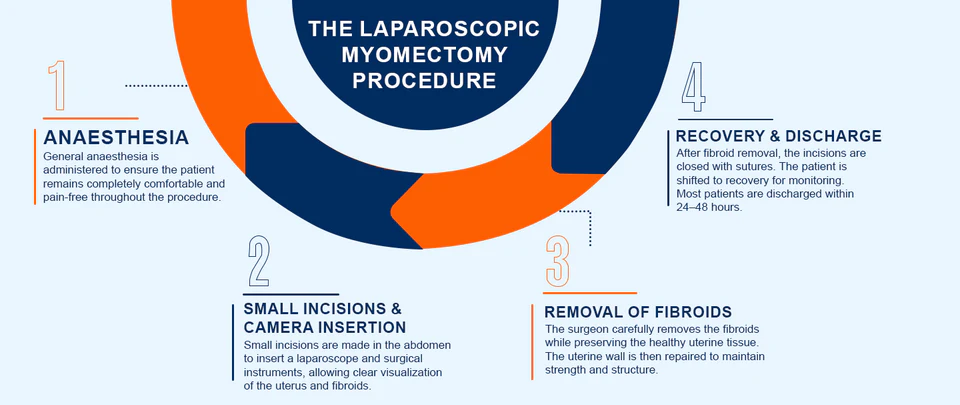
Laparoscopic myomectomy procedure overview
How fibroid removal (myomectomy) is performed

How the procedure is performed

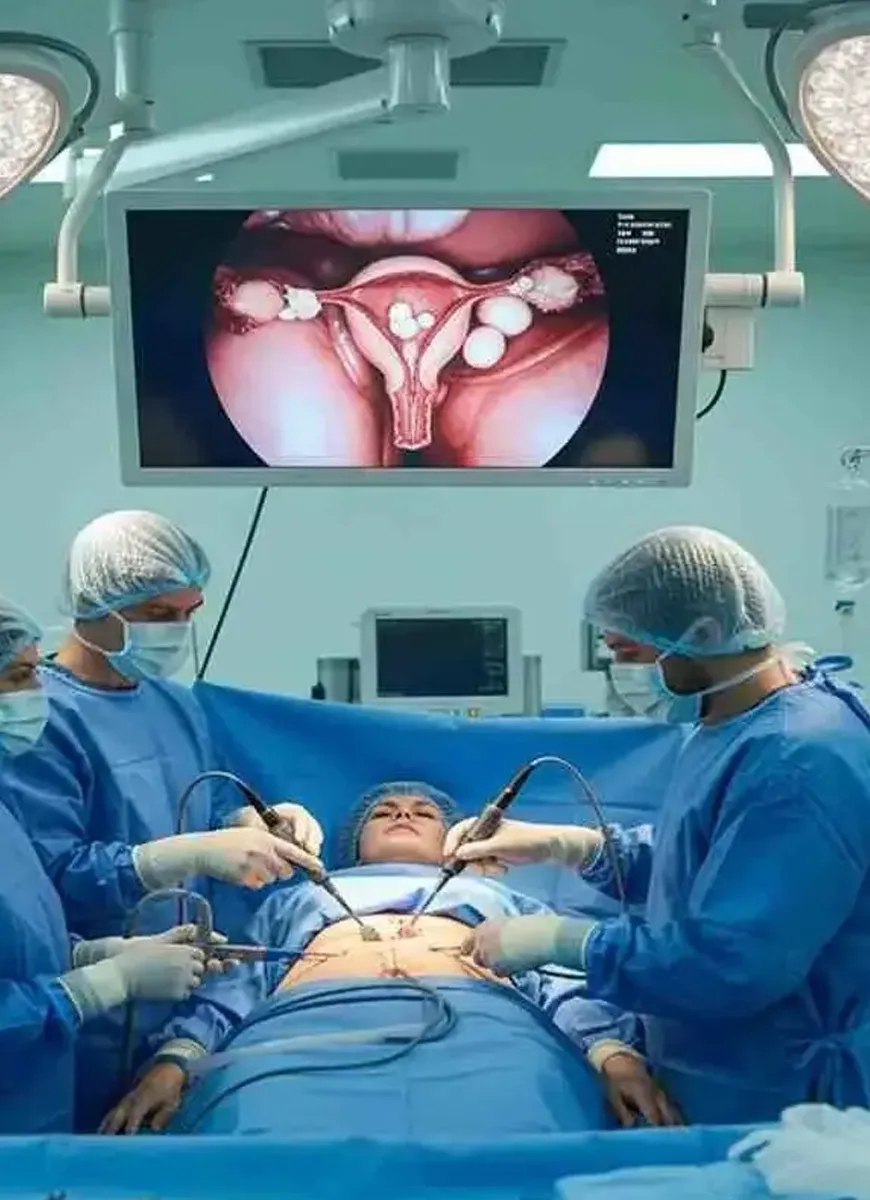
Laparoscopic myomectomy is done under general anaesthesia. The abdomen is inflated with carbon-dioxide gas and a high-definition laparoscope is inserted at the navel, with two or three small working ports placed lower down. Medication may be injected around the fibroid to minimise bleeding.

The surgeon incises the uterine wall over each fibroid and enucleates it - shelling the firm fibroid out of its capsule. The uterine muscle is then repaired in two or three strong layers with dissolvable sutures, restoring the wall's integrity, which is especially important for women planning pregnancy.

Removed fibroids are extracted using contained retrieval techniques through a slightly widened port. The operation takes 1.5 to 3 hours depending on the number and size of fibroids. Most women walk the same evening, go home in one to two days, and review with the histopathology report at follow-up.

Recovery & aftercare

  • Walk from the evening of surgery and build up activity gradually over two weeks
  • Expect mild spotting for a few days and period-like cramps that respond to simple painkillers
  • Avoid lifting more than 5 kg, gym workouts and long travel for four to six weeks
  • Continue iron supplements to correct anaemia caused by earlier heavy bleeding
  • Use contraception and delay pregnancy for the interval your surgeon advises - usually three to six months
  • Attend free Axten follow-ups so scar healing and cycle patterns are properly reviewed
Recovery and aftercare following fibroid removal
Recovery after fibroid removal (myomectomy)

Why Axten

Care that doesn't stop at the operating table

Every fibroid removal (myomectomy) package includes your surgeon's fee, OT and anaesthesia charges, hospital stay, standard medicines and post-procedure follow-ups - quoted once, in writing, before you decide.

  1. Talk with our experts

    Share your reports on a free call. A specialist reviews your case the same day.

  2. Honest fixed quote

    Receive one all-inclusive package price in writing - before you commit to anything.

  3. Insurance & paperwork

    Our insurance desk secures cashless approval and completes every formality.

  4. Your procedure

    A senior specialist operates at a partner hospital near you, on your scheduled date.

  5. Recovery & follow-ups

    Free follow-up consultations and recovery monitoring until you are fully healed.

The Axten standard

Why patients choose Axten for fibroid removal (myomectomy)

For fibroid removal (myomectomy), Axten focuses on the parts patients usually find stressful: confirming the right specialist, explaining the procedure clearly, locking the package price in writing and keeping recovery follow-ups organised.

NABHstandard partner hospitals
100%written package quotes
24x7care helpline access

Senior surgeon review

Your case is reviewed for clinical fit before a date or package is suggested.
One written package

Surgeon, OT, anaesthesia, stay, standard medicines and follow-ups are itemised upfront.

Insurance handled early

Cashless eligibility, TPA paperwork and EMI options are checked before admission.

Coordinator-led recovery

A care coordinator keeps follow-ups, reports and recovery instructions organised.

FAQs about fibroid removal (myomectomy)

Can I get pregnant after a myomectomy?

Yes - preserving fertility is the main reason myomectomy is chosen over hysterectomy. Removing fibroids that distort the cavity often improves conception chances. Surgeons usually advise waiting three to six months before trying, so the uterine wall regains full strength, and some deliveries after deep myomectomy are planned as caesareans.

Are fibroids cancerous?

Fibroids are almost always benign; the risk of a hidden cancer (leiomyosarcoma) is extremely low. Rapid growth after menopause or unusual scan features raise caution, which is why every removed fibroid at Axten is examined by histopathology. Your report is explained personally at the free follow-up visit.

Will my fibroids come back after surgery?

The removed fibroids cannot regrow, but new fibroids can develop over the years, especially in younger women with multiple fibroids. Recurrence needing repeat surgery is much less common. Periodic ultrasound checks, healthy weight and follow-up reviews help detect any new fibroid early, when simple options still work.

Can large fibroids be removed laparoscopically?

Frequently, yes. Experienced laparoscopic surgeons remove fibroids of 8-10 cm and beyond using bleeding-control techniques and contained retrieval. Extremely large or very numerous fibroids may still be safer through a limited open incision. Your MRI review decides this honestly before surgery, and the recommendation is fully explained to you.

Do all fibroids need surgery?

No. Small fibroids without symptoms simply need periodic scans. Treatment is advised for heavy bleeding, anaemia, pressure symptoms, rapid growth, infertility linked to the fibroid, or pain. Medicines and embolisation help selected patients, but surgical removal remains the definitive treatment for symptomatic fibroids, particularly when fertility matters.

How is myomectomy different from hysterectomy?

Myomectomy removes only the fibroids and repairs the uterus, keeping menstruation and fertility intact. Hysterectomy removes the whole uterus, permanently ending periods and pregnancy. Myomectomy suits women wanting children or wishing to keep their womb; hysterectomy is a definitive option when family is complete and disease is extensive.

What does Axten's myomectomy package include?

One written all-inclusive price covers surgeon and anaesthetist fees, theatre and laparoscopy consumables, room stay, in-hospital medicines, histopathology and scheduled free follow-ups - zero surprise billing, guaranteed. Cashless insurance approval and 0% EMI plans are arranged by your dedicated care coordinator. Call 8156-92-92-92 for a personalised quote.

Ready to discuss fibroid removal (myomectomy)?

Free specialist consultation and an honest all-inclusive quote - no obligation.