Laparoscopic Gallbladder Removal (Cholecystectomy)

LaparoscopicSpecialist surgeons onlyCashless insuranceFree follow-ups
Gallbladder removal surgery consultation
Gallbladder Removal - specialist-led treatment at Axten

The gallbladder is a small pear-shaped pouch under the liver that stores bile, the digestive fluid that helps break down fats. Gallstones form when substances in bile - mainly cholesterol or bile pigments - crystallise into hard deposits ranging from sand-like grains to stones several centimetres wide. They are very common in India, particularly in women, after multiple pregnancies, with obesity or rapid weight loss, and after the age of forty.

Many gallstones remain silent, but once they start causing symptoms - typically severe cramping pain in the upper right abdomen after fatty meals - attacks tend to recur and complications become likely. Stones can block the gallbladder outlet causing acute cholecystitis, or slip into the bile duct causing jaundice or pancreatitis, which are serious emergencies.

The definitive treatment is laparoscopic cholecystectomy - keyhole removal of the gallbladder along with the stones. At Axten Hospitals, this gold-standard surgery is performed only by specialist laparoscopic surgeons, with an honest all-inclusive package price, zero surprise billing, cashless insurance, 0% EMI options and free post-surgery follow-ups.

Honest all-inclusive price₹60,000 - ₹1,10,000 (all-inclusive, varies by severity & city)See full cost breakdown

Consult for Gallbladder Removal

Share your details - a care coordinator calls you back within minutes.

Country code +91 selected.

100% confidential · No spam · Honest all-inclusive quotes

Symptoms of Gallstones

  • Severe cramping pain in the upper right or centre of the abdomen, often after oily meals
  • Pain radiating to the right shoulder blade or back
  • Nausea and vomiting during pain attacks
  • Bloating, heaviness and indigestion after fatty food
  • Fever with abdominal pain when the gallbladder is inflamed
  • Yellowing of eyes or skin and dark urine if a stone blocks the bile duct

Risks of delaying treatment

  • Repeated gallstone attacks can inflame the gallbladder (acute cholecystitis), sometimes needing emergency surgery
  • A stone slipping into the bile duct can cause jaundice and dangerous bile infection (cholangitis)
  • Stones blocking the pancreatic opening can trigger acute pancreatitis, a potentially life-threatening emergency
  • Long-standing inflammation makes eventual surgery technically harder and raises conversion to open operation

How is gallstones diagnosed?

An abdominal ultrasound is the key test - it is painless, widely available and detects gallstones with excellent accuracy, while also showing gallbladder wall inflammation or a dilated bile duct. Blood tests check liver function, infection markers and pancreatic enzymes to detect complications.

If a stone is suspected to have slipped into the main bile duct, an MRCP (a special MRI of the bile ducts) maps the ducts precisely; such stones may need endoscopic removal (ERCP) before or along with gallbladder surgery. Axten specialists sequence these steps clearly and include everything in one transparent estimate.

Benefits of laparoscopic treatment

  • Four tiny keyhole incisions instead of a long painful open cut
  • Discharge usually within 24 to 48 hours of surgery
  • Permanent cure - stones cannot re-form once the gallbladder is removed
  • Minimal pain, small scars and low wound infection rates
  • Back to office work in about a week for most patients
  • Digestion continues normally; the liver keeps producing bile as before

Types of gallbladder removal

Non-surgical options

  • Watchful waiting - truly silent, symptomless stones found incidentally may simply be monitored in some patients.
  • Bile acid dissolution tablets - rarely useful; they work only on tiny cholesterol stones, take months, and stones usually recur.
  • ERCP - an endoscopic procedure to remove stones that have slipped into the bile duct, done alongside surgery when needed.

Surgical & procedural options

  • Laparoscopic cholecystectomy - keyhole removal of the gallbladder through four tiny incisions, the gold-standard treatment.
  • Open cholecystectomy - removal through a larger incision, reserved for severe inflammation, scarring or unsafe keyhole anatomy.
  • Robotic cholecystectomy - robot-assisted keyhole removal available at select centres, with outcomes similar to laparoscopy.
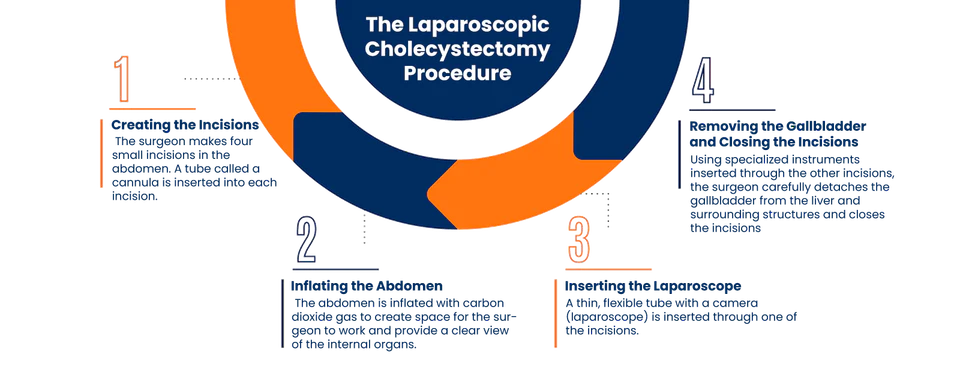
Laparoscopic gallbladder removal procedure illustration
How gallbladder removal is performed

How the procedure is performed

Laparoscopic cholecystectomy is performed under general anaesthesia and takes about 45 to 90 minutes. The surgeon makes four small incisions of 5 to 10 mm, gently inflates the abdomen with carbon dioxide for a clear view, and inserts a high-definition camera and fine instruments. The artery and duct of the gallbladder are identified with care, clipped securely and divided.

The gallbladder - with all its stones inside - is then freed from the liver bed and removed through one of the small ports in a retrieval bag. The surgeon checks for any bleeding or bile leak before closing the tiny incisions with absorbable stitches.

Most patients sip fluids within hours, eat a light meal the same evening, walk comfortably by night and are discharged within 24 to 48 hours. Your Axten care coordinator handles insurance pre-authorisation, admission and discharge, and free follow-up visits are booked before you leave.

Recovery & aftercare

  • Walk within hours of surgery; most patients go home in 1 to 2 days
  • Begin with light, low-fat meals and return to a normal diet gradually over 2 to 4 weeks
  • Resume desk work in about 5 to 7 days; avoid heavy lifting for 2 to 3 weeks
  • Keep the small incisions clean and dry; dressings are minimal
  • Mild shoulder-tip pain from the laparoscopy gas is normal and settles in a day or two
  • Attend your free Axten follow-up for wound review and diet guidance

Why Axten

Care that doesn't stop at the operating table

Every gallbladder removal package includes your surgeon's fee, OT and anaesthesia charges, hospital stay, standard medicines and post-procedure follow-ups - quoted once, in writing, before you decide.

  1. Talk with our experts

    Share your reports on a free call. A specialist reviews your case the same day.

  2. Honest fixed quote

    Receive one all-inclusive package price in writing - before you commit to anything.

  3. Insurance & paperwork

    Our insurance desk secures cashless approval and completes every formality.

  4. Your procedure

    A senior specialist operates at a partner hospital near you, on your scheduled date.

  5. Recovery & follow-ups

    Free follow-up consultations and recovery monitoring until you are fully healed.

The Axten standard

Why patients choose Axten for gallbladder removal

For gallbladder removal, Axten focuses on the parts patients usually find stressful: confirming the right specialist, explaining the procedure clearly, locking the package price in writing and keeping recovery follow-ups organised.

NABHstandard partner hospitals
100%written package quotes
24x7care helpline access

Senior surgeon review

Your case is reviewed for clinical fit before a date or package is suggested.
One written package

Surgeon, OT, anaesthesia, stay, standard medicines and follow-ups are itemised upfront.

Insurance handled early

Cashless eligibility, TPA paperwork and EMI options are checked before admission.

Coordinator-led recovery

A care coordinator keeps follow-ups, reports and recovery instructions organised.

FAQs about gallbladder removal

Can gallstones be dissolved with medicines instead of surgery?

For most patients, no. Dissolution tablets work only on small, pure cholesterol stones in a functioning gallbladder, take twelve to twenty-four months, and stones commonly return once tablets stop. No medicine works on calcified or pigment stones. That is why surgical removal of the gallbladder remains the reliable, permanent solution for symptomatic gallstones.

Why is the whole gallbladder removed instead of just the stones?

If only the stones are removed, the diseased gallbladder keeps forming new stones - recurrence is almost certain, along with repeat surgeries and risks. Removing the gallbladder removes the factory, not just the product. The body adapts smoothly: bile made by the liver simply flows directly into the intestine and digestion continues normally.

Is life normal after gallbladder removal?

Yes, completely. The liver continues producing bile, which flows straight into the intestine. Most people eat everything they did before within a month, needing no long-term medicines or restrictions. A few experience temporary looseness of stools after fatty meals in the early weeks, which almost always settles as the digestive system adjusts.

What does gallbladder surgery cost in India?

At Axten Hospitals, laparoscopic gallbladder removal typically costs ₹60,000 to ₹1,10,000 depending on the degree of inflammation and your city. The quote is one honest all-inclusive figure - surgeon, anaesthesia, theatre, room, medicines and follow-ups - with zero surprise billing. Cashless insurance and 0% EMI are available. Call 8156-92-92-92 for your personal estimate.

How many days will I need off work after laparoscopic cholecystectomy?

Most patients with sedentary jobs return to work within five to seven days of keyhole gallbladder surgery. Household activities can restart within two to three days. Heavy lifting, gym workouts and strenuous physical labour should wait two to three weeks. Your Axten surgeon reviews your recovery at a free follow-up before clearing strenuous activity.

I have silent gallstones found on a routine scan. Do I need surgery?

Not always. Truly symptomless stones in a low-risk patient can often be observed. However, surgery is generally advised if stones are large, the gallbladder wall is thickened or calcified, you are diabetic, or you have even mild recurring symptoms - because first complications can be severe. An Axten specialist can assess your scan and advise honestly.

Is laparoscopic gallbladder surgery safe in diabetics and elderly patients?

Yes, with proper preparation it is very safe. In fact, specialists often advise earlier surgery in diabetics because gallbladder infections in them can escalate quickly and silently. Axten's anaesthetists optimise sugar levels, heart and lung fitness before surgery, and the keyhole approach means faster mobilisation - particularly valuable for elderly patients.

What if a stone has slipped into my bile duct?

Bile duct stones are usually removed by ERCP - an endoscopic procedure done through the mouth without any incision - either before or around the time of gallbladder surgery. Ignoring them risks jaundice, bile infection and pancreatitis. Axten coordinates ERCP and laparoscopic cholecystectomy seamlessly under one transparent, all-inclusive treatment plan.

Ready to discuss gallbladder removal?

Free specialist consultation and an honest all-inclusive quote - no obligation.