Painless Normal Delivery

PainlessSpecialist surgeons onlyCashless insuranceFree follow-ups
Normal delivery consultation and maternity care
Normal Delivery - specialist-led treatment at Axten

Normal delivery, also called vaginal birth, is the natural way a baby is born through the birth canal. It is the safest mode of childbirth for most healthy pregnancies, allowing quicker recovery, earlier breastfeeding and a shorter hospital stay. At Axten Hospitals, experienced obstetricians and trained labour nurses support you through every stage of labour so that both mother and baby remain safe and comfortable.

Painless delivery uses epidural analgesia, a well-established technique in which a specialist anaesthetist places a thin catheter in the lower back to deliver continuous pain-relieving medicine. You stay fully awake and able to push, but the intense pain of contractions is dramatically reduced. This helps you conserve energy, keeps blood pressure stable and makes the birthing experience calmer for the whole family.

Every Axten maternity package is honest and all-inclusive - labour room charges, epidural, obstetrician and paediatrician fees, room stay and medicines are explained upfront with zero surprise billing. A dedicated care coordinator guides you from your first antenatal visit to discharge, and free post-delivery follow-ups ensure mother and baby continue to do well at home.

Honest all-inclusive price₹35,000 - ₹75,000 (all-inclusive maternity package, varies by room type & city)See full cost breakdown

Consult for Normal Delivery

Share your details - a care coordinator calls you back within minutes.

Country code +91 selected.

100% confidential · No spam · Honest all-inclusive quotes

Symptoms of Pregnancy & Childbirth

  • Regular, progressively stronger uterine contractions
  • Lower back ache that comes in waves
  • Passage of the mucus plug or blood-tinged show
  • Breaking of the water bag (leaking amniotic fluid)
  • Pressure in the pelvis as the baby's head descends
  • Cramping similar to strong period pain
  • An urge to push in the final stage of labour

Risks of delaying treatment

  • Skipping antenatal check-ups can leave high blood pressure, diabetes or a poorly positioned baby undetected until labour
  • Ignoring leaking water or reduced baby movements risks infection and foetal distress
  • Delaying hospital admission after strong contractions begin may lead to an unplanned, unattended delivery
  • Untreated prolonged labour can exhaust the mother and compromise the baby's oxygen supply

How is pregnancy & childbirth diagnosed?

Your obstetrician confirms readiness for normal delivery through regular antenatal check-ups, ultrasound scans to assess the baby's growth and position, and pelvic examination close to the due date. Blood pressure, blood sugar, haemoglobin and foetal heart monitoring help rule out conditions that may need a caesarean.

Once labour begins, cervical dilation checks and continuous cardiotocography (CTG) track the baby's heartbeat and the strength of contractions. This monitoring lets the Axten labour team support a safe vaginal birth and act quickly if plans need to change.

Benefits of painless treatment

  • Faster recovery and shorter hospital stay than caesarean birth
  • Epidural analgesia keeps you comfortable yet fully awake and involved
  • Lower risk of surgical complications such as infection and blood loss
  • Earlier skin-to-skin contact and easier initiation of breastfeeding
  • Baby receives beneficial bacteria and lung stimulation during vaginal birth
  • Future pregnancies face fewer risks compared with repeat caesareans

Types of normal delivery

Non-surgical options

  • Natural vaginal delivery - spontaneous labour and birth without pain-relief injections, supported by breathing techniques.
  • Painless (epidural) delivery - vaginal birth with continuous epidural analgesia for excellent pain control.
  • Induced labour - medicines or gentle methods are used to start labour when waiting is no longer safe.
  • Assisted vaginal delivery - a vacuum cup or forceps helps deliver the baby in the final stage when needed.
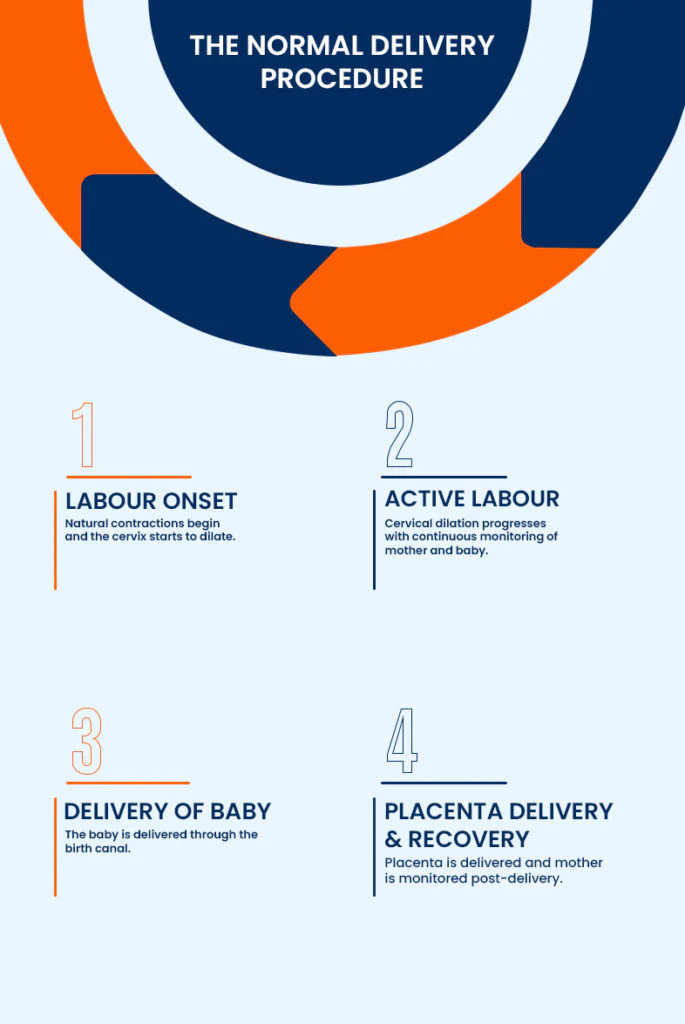
Normal delivery process overview
How normal delivery is performed

How the procedure is performed

Labour has three stages. In the first stage, contractions gradually open (dilate) the cervix to 10 cm. This is the longest stage and, if you choose painless delivery, the anaesthetist places the epidural once active labour is established - a quick procedure done under local anaesthesia that takes about 10-15 minutes.

In the second stage, you push with each contraction while the obstetrician and midwife guide the baby's head out gently. With an effective epidural you still feel pressure and can push well, but without severe pain. The baby is delivered, the cord is clamped, and immediate skin-to-skin contact is encouraged.

In the third stage, the placenta is delivered and any small tear or episiotomy is repaired with dissolvable stitches. Mother and baby are monitored closely for a few hours, and most families go home within 48 hours of a normal delivery.

Recovery & aftercare

  • Walk gently within a few hours of delivery to improve circulation and prevent clots
  • Do prescribed pelvic floor (Kegel) exercises to regain muscle strength
  • Keep the stitch area clean and dry; use warm water washes after toilet visits
  • Eat an iron- and protein-rich diet and drink plenty of fluids to support healing and breastfeeding
  • Take adequate rest and accept help at home; avoid heavy lifting for six weeks
  • Attend your free Axten follow-up visits for wound check, breastfeeding support and vaccination guidance

Why Axten

Care that doesn't stop at the operating table

Every normal delivery package includes your surgeon's fee, OT and anaesthesia charges, hospital stay, standard medicines and post-procedure follow-ups - quoted once, in writing, before you decide.

  1. Talk with our experts

    Share your reports on a free call. A specialist reviews your case the same day.

  2. Honest fixed quote

    Receive one all-inclusive package price in writing - before you commit to anything.

  3. Insurance & paperwork

    Our insurance desk secures cashless approval and completes every formality.

  4. Your procedure

    A senior specialist operates at a partner hospital near you, on your scheduled date.

  5. Recovery & follow-ups

    Free follow-up consultations and recovery monitoring until you are fully healed.

The Axten standard

Why patients choose Axten for normal delivery

For normal delivery, Axten focuses on the parts patients usually find stressful: confirming the right specialist, explaining the procedure clearly, locking the package price in writing and keeping recovery follow-ups organised.

NABHstandard partner hospitals
100%written package quotes
24x7care helpline access

Senior surgeon review

Your case is reviewed for clinical fit before a date or package is suggested.

One written package

Surgeon, OT, anaesthesia, stay, standard medicines and follow-ups are itemised upfront.

Insurance handled early

Cashless eligibility, TPA paperwork and EMI options are checked before admission.

Coordinator-led recovery

A care coordinator keeps follow-ups, reports and recovery instructions organised.

FAQs about normal delivery

Is painless delivery really painless?

Epidural analgesia removes most of the sharp pain of contractions, though you may still feel pressure and tightening. Pain scores typically drop from severe to very mild. You remain awake, alert and able to push. Our anaesthetists adjust the dose through labour so you stay comfortable from active labour until delivery.

Is the epidural safe for my baby?

Yes. The medicine acts on the nerves in your lower back and very little reaches the baby. Decades of research show epidurals do not harm newborns. Your baby's heartbeat is monitored continuously throughout labour, and a paediatrician attends every delivery at Axten Hospitals as an added layer of safety.

How long will I stay in hospital after a normal delivery?

Most mothers go home within 24 to 48 hours after an uncomplicated vaginal birth. Before discharge our team ensures your bleeding is settling, breastfeeding is established and the baby's initial checks and vaccinations are complete. Free post-delivery follow-ups are included, so recovery continues to be supervised after you reach home.

Does an epidural increase the chance of a caesarean?

No. Large studies confirm that epidural analgesia does not raise caesarean rates. It may slightly lengthen the pushing stage, which our obstetricians manage with positioning and dose adjustment. A caesarean is advised only for genuine medical reasons, and the decision is always explained clearly to you and your family first.

Can I opt for painless delivery at the last minute?

Usually yes, provided the anaesthetist assesses you and labour has not advanced too far - typically before the cervix is fully dilated. We recommend discussing epidural analgesia during antenatal visits so your records are ready. Informing your Axten care coordinator in advance makes the process smooth when labour begins.

What does the Axten maternity package include?

Our all-inclusive package covers labour room and delivery charges, obstetrician and paediatrician fees, epidural if chosen, room stay, routine medicines, consumables and the newborn's first examination. The price is confirmed in writing before admission - zero surprise billing. Cashless insurance and 0% EMI options are available; call 8156-92-92-92 for details.

When should I rush to the hospital?

Come immediately if your water breaks, contractions become regular and strong (every 5 minutes or closer), you notice bleeding, severe headache, blurred vision, or if baby movements reduce noticeably. When in doubt, call your Axten care coordinator any time - it is always safer to be checked early than to wait at home.

Will I need stitches after a normal delivery?

Many first-time mothers need a few dissolvable stitches for a small tear or a controlled cut called an episiotomy. These heal within two to three weeks with basic hygiene and prescribed care. Our doctors use episiotomy selectively, not routinely, and pain-relief measures keep discomfort minimal during healing.

Ready to discuss normal delivery?

Free specialist consultation and an honest all-inclusive quote - no obligation.