
Laparoscopic Hernia Surgery

LaparoscopicSpecialist surgeons onlyCashless insuranceFree follow-ups
Hernia surgery treatment overview
Hernia Surgery - specialist-led treatment at Axten

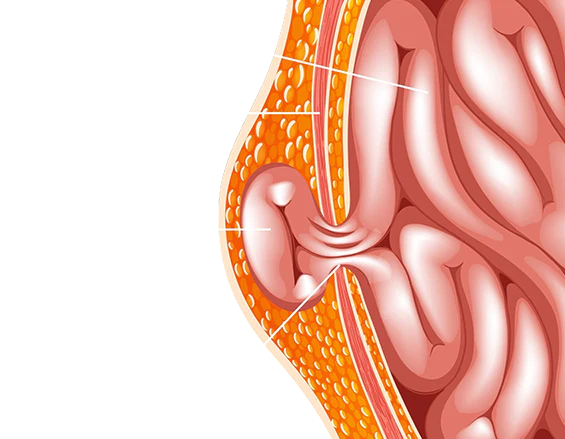
A hernia occurs when an internal organ - usually a loop of intestine or fatty tissue - pushes through a weak spot in the muscle wall that normally holds it in place. It appears as a soft bulge that becomes more prominent on standing, coughing, straining or lifting, and often reduces or disappears on lying down. Common sites are the groin (inguinal), the navel (umbilical), and previous surgical scars (incisional).

Hernias develop because of muscle weakness combined with strain - heavy lifting, chronic cough, constipation, obesity, pregnancy or previous surgery. A hernia never heals on its own; the defect in the muscle wall can only enlarge with time. Belts and trusses may hide the bulge but do not repair the weakness.

Axten Hospitals repairs hernias laparoscopically, reinforcing the weak area with a high-quality surgical mesh through tiny keyhole incisions. Surgery is performed only by specialist hernia surgeons, with an honest all-inclusive package - mesh included - zero surprise billing, cashless insurance, 0% EMI and free follow-up visits.

Honest all-inclusive price₹65,000 - ₹1,20,000 (all-inclusive with mesh, varies by type & city)See full cost breakdown

Consult for Hernia Surgery

Share your details - a care coordinator calls you back within minutes.

Country code +91 selected.

100% confidential · No spam · Honest all-inclusive quotes

Symptoms of Hernia

  • A visible or palpable bulge in the groin, navel or near an old surgical scar
  • The bulge enlarges on standing, coughing or straining and may reduce on lying down
  • Dragging discomfort, heaviness or aching at the site, worse by evening
  • Pain while lifting weights, exercising or straining on the toilet
  • In men, occasional swelling extending into the scrotum with groin hernias
  • Sudden severe pain with a hard, irreducible bulge - an emergency warning sign

Risks of delaying treatment

  • The muscle defect only enlarges with time, making repair progressively more complex
  • Intestine can get trapped in the hernia (obstruction), causing pain, vomiting and emergency admission
  • A trapped loop can lose its blood supply (strangulation) - a life-threatening emergency requiring urgent surgery
  • Emergency hernia surgery carries far higher risks and costs than a planned keyhole repair
Common symptoms associated with a hernia
Understanding hernia

How is hernia diagnosed?

Most hernias are diagnosed by clinical examination alone - the surgeon feels the bulge while you stand and cough, confirming the site and whether the contents slide back in (reducibility). Examination also checks the opposite side, since groin hernias are frequently bilateral.

An ultrasound helps when the swelling is small, deep or the diagnosis is doubtful, and a CT scan is useful for large incisional hernias to map the muscle defect and plan mesh size. At Axten, imaging is advised only when it genuinely changes the plan, and every test appears transparently in your single all-inclusive estimate.

Benefits of laparoscopic treatment

  • Three tiny keyhole incisions instead of a long open cut
  • Mesh placed from inside gives strong, tension-free, lasting repair
  • Both sides of the groin can be repaired in one sitting if needed
  • Less post-operative pain and earlier return to work than open repair
  • Lower rates of wound infection and chronic groin pain
  • Ideal for recurrent hernias, avoiding scarred tissue from previous surgery

Types of hernia surgery

Non-surgical options

  • Watchful waiting - an option only for small, completely symptomless hernias in select patients, with clear warning signs explained.
  • Hernia belt or truss - a temporary comfort measure for those unfit for surgery; it does not repair the defect and is not a cure.

Surgical & procedural options

  • Laparoscopic TEP repair - mesh is placed behind the muscle wall through keyholes without entering the abdominal cavity.
  • Laparoscopic TAPP repair - mesh is positioned over the defect from inside the abdomen, useful for bilateral and recurrent hernias.
  • Open mesh repair (Lichtenstein) - time-tested open technique through a groin incision, suitable when laparoscopy is not appropriate.
  • Laparoscopic/open incisional hernia repair with mesh - closure and reinforcement of defects at previous surgical scars.

How the procedure is performed

Laparoscopic hernia repair is performed under general anaesthesia and usually takes 45 to 90 minutes. The surgeon makes three small incisions of 5 to 10 mm and creates a working space behind the abdominal muscles using a camera and fine instruments. The hernia contents are gently drawn back to their normal position and the sac is dealt with.

A strong, lightweight surgical mesh is then spread widely over the weak area from the inside, where natural abdominal pressure holds it flat against the muscle wall - a tension-free repair that is mechanically far stronger than stitching muscle edges together. The mesh integrates with your tissues over weeks, permanently reinforcing the area.

Incisions are closed with absorbable stitches and most patients walk the same evening, eat normally and go home within 24 to 48 hours. Axten's package includes the mesh - no last-minute add-on charges - and free follow-ups are scheduled to track your recovery.

Recovery & aftercare

  • Walk from the evening of surgery; climb stairs comfortably within a couple of days
  • Resume desk work in about 5 to 7 days and driving in about a week
  • Avoid lifting anything heavier than 5 kg for the first 4 to 6 weeks
  • Treat constipation and chronic cough promptly - straining stresses the repair
  • Wear the supportive garment if advised, especially for large hernias
  • Attend free Axten follow-ups so the surgeon can confirm the repair is settling well

Why Axten

Care that doesn't stop at the operating table

Every hernia surgery package includes your surgeon's fee, OT and anaesthesia charges, hospital stay, standard medicines and post-procedure follow-ups - quoted once, in writing, before you decide.

  1. Talk with our experts

    Share your reports on a free call. A specialist reviews your case the same day.

  2. Honest fixed quote

    Receive one all-inclusive package price in writing - before you commit to anything.

  3. Insurance & paperwork

    Our insurance desk secures cashless approval and completes every formality.

  4. Your procedure

    A senior specialist operates at a partner hospital near you, on your scheduled date.

  5. Recovery & follow-ups

    Free follow-up consultations and recovery monitoring until you are fully healed.

The Axten standard

Why patients choose Axten for hernia surgery

For hernia surgery, Axten focuses on the parts patients usually find stressful: confirming the right specialist, explaining the procedure clearly, locking the package price in writing and keeping recovery follow-ups organised.

NABHstandard partner hospitals
100%written package quotes
24x7care helpline access

Senior surgeon review

Your case is reviewed for clinical fit before a date or package is suggested.
One written package

Surgeon, OT, anaesthesia, stay, standard medicines and follow-ups are itemised upfront.

Insurance handled early

Cashless eligibility, TPA paperwork and EMI options are checked before admission.

Coordinator-led recovery

A care coordinator keeps follow-ups, reports and recovery instructions organised.

FAQs about hernia surgery

Can a hernia be cured with exercise, medicines or a belt?

No. A hernia is a physical gap in the muscle wall, and no medicine, exercise or belt can close it. A truss only pushes the bulge in temporarily and may even damage the contents with prolonged use. Surgical repair with mesh is the only cure. In fact, unsupervised heavy core exercise can enlarge the defect further.

Is mesh repair safe? I have read worrying things about mesh.

Modern lightweight surgical meshes are extensively tested, biocompatible and used safely in millions of repairs worldwide every year. They reduce recurrence from around 10-15 percent (stitch-only repair) to under 2 percent. Complications are rare in specialist hands. Axten uses only certified, internationally approved meshes, included transparently in your all-inclusive package price.

How long does recovery take after laparoscopic hernia surgery?

Most patients walk the same day, go home within 24 to 48 hours and resume desk work in five to seven days. Driving is usually fine after about a week. Heavy lifting and vigorous gym workouts should wait four to six weeks while the mesh integrates firmly. Your Axten surgeon personalises these timelines at your free follow-ups.

What is the cost of hernia surgery in India?

At Axten Hospitals, laparoscopic hernia repair typically costs ₹65,000 to ₹1,20,000 depending on hernia type, size and city - quoted as one honest all-inclusive price covering surgeon, anaesthesia, theatre, room, the mesh itself, medicines and follow-ups, with zero surprise billing. Cashless insurance and 0% EMI are available. Call 8156-92-92-92 for an exact quote.

What happens if I ignore my hernia?

The defect gradually widens and the bulge grows, but the real danger is sudden: a loop of intestine can get stuck (obstruction) or lose its blood supply (strangulation), causing severe pain, vomiting and a surgical emergency where delay can be fatal. Planned keyhole repair is far safer, cheaper and easier to recover from than emergency surgery.

Can both groin hernias be repaired in one operation?

Yes - this is a major advantage of laparoscopy. Both sides can be repaired in the same sitting through the same three keyhole incisions, with one anaesthesia, one hospital stay and one recovery period. The camera also detects small hidden hernias on the opposite side that clinical examination may miss, so they are fixed before they cause trouble.

Will the hernia come back after mesh repair?

Recurrence after a properly performed laparoscopic mesh repair is low - typically under 2 percent. You can protect the repair further by maintaining a healthy weight, avoiding smoking, treating chronic cough and constipation, and following lifting restrictions during the first six weeks. Axten's free follow-up visits ensure any concern is examined early by your surgeon.

Is hernia surgery safe for elderly patients and those with diabetes or heart disease?

Yes, with proper pre-operative assessment. Axten's anaesthetists evaluate heart, lung, kidney and sugar status before surgery and optimise them first. Keyhole repair suits older patients well because early walking prevents complications like clots and chest infections. Leaving a hernia untreated in the elderly is usually riskier than a well-planned elective repair.

Ready to discuss hernia surgery?

Free specialist consultation and an honest all-inclusive quote - no obligation.