Laser Kidney Stone Removal (RIRS / URSL) - No Cuts, No Stitches

Laser (RIRS/URSL)Specialist surgeons onlyCashless insuranceFree follow-ups
RIRS laser treatment for kidney stones
Kidney Stone Removal (Laser, No Cuts) - specialist-led treatment at Axten

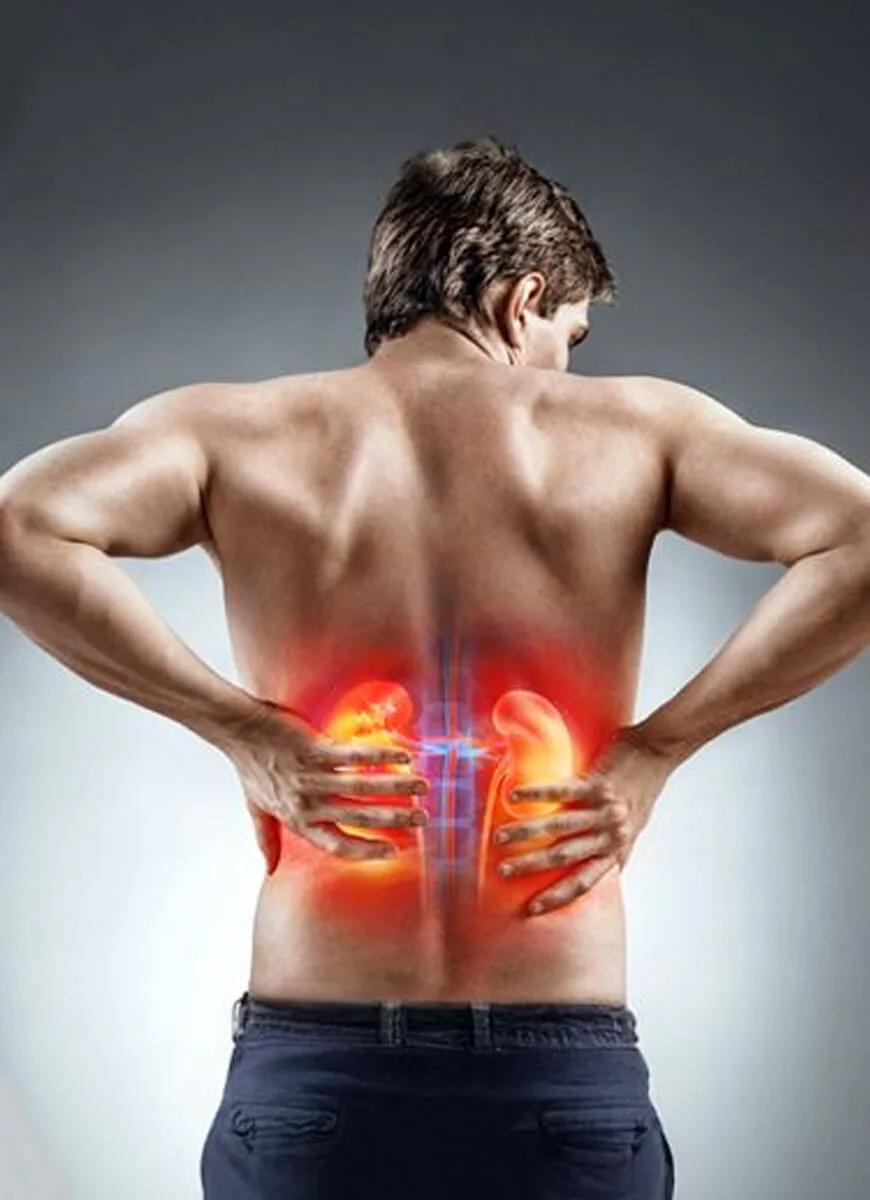
Kidney stones are hard deposits of minerals and salts that form inside the kidneys when urine becomes too concentrated. They range from tiny grains that pass out unnoticed to larger stones that block the flow of urine and trigger episodes of severe, cramping pain in the back or side. Stones are very common in India - hot weather, low water intake and dietary habits all play a part - and they tend to recur if the root cause is not corrected.

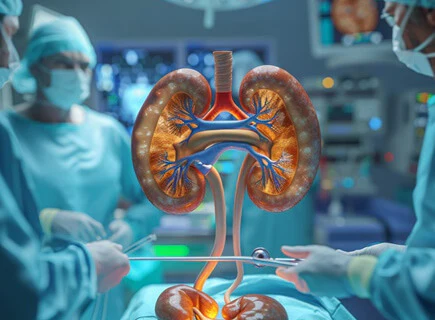
Modern laser procedures remove stones through the body's natural urinary passage, so there are no cuts, no stitches and no visible scars. In URSL (ureteroscopic lithotripsy), a thin scope reaches stones stuck in the ureter; in RIRS (retrograde intrarenal surgery), a flexible scope travels right into the kidney. A fine holmium laser fibre then breaks the stone into dust and tiny fragments, which are removed with a basket or washed out naturally in the urine over the next few days.

At Axten Hospitals, laser stone removal is performed only by experienced, specialist urologists. You receive one honest, all-inclusive price before admission - covering surgeon fees, laser charges, room, medicines and consumables - with zero surprise billing. Cashless insurance, 0% EMI options, a dedicated care coordinator and free post-surgery follow-ups mean you can focus on recovery, not paperwork.

Honest all-inclusive price₹50,000 - ₹1,10,000 (all-inclusive; varies by stone size, location, technique & city)See full cost breakdown

Consult for Kidney Stone Removal (Laser, No Cuts)

Share your details - a care coordinator calls you back within minutes.

Country code +91 selected.

100% confidential · No spam · Honest all-inclusive quotes

Symptoms of Kidney Stones

  • Severe cramping pain in the back, side or lower abdomen
  • Pain that comes in waves and radiates towards the groin
  • Blood in the urine (pink, red or brown discolouration)
  • Burning or pain while passing urine
  • Frequent urge to urinate, often in small amounts
  • Nausea and vomiting during pain episodes
  • Fever with chills if an infection sets in

Risks of delaying treatment

  • A stone blocking the ureter can silently damage and permanently shrink the kidney over weeks to months
  • Urine trapped behind a stone can become infected, leading to sepsis - a life-threatening emergency
  • Stones grow with time, turning a simple no-cut laser case into a bigger keyhole surgery
  • Repeated pain attacks, emergency visits and lost workdays usually cost far more than timely treatment

How is kidney stones diagnosed?

Diagnosis starts with a detailed history and physical examination, followed by imaging. An ultrasound of the kidneys, ureters and bladder (USG KUB) is usually the first test, often combined with an X-ray KUB. A non-contrast CT scan (NCCT KUB) is the most accurate investigation - it confirms the exact size, number, location and hardness of stones, which decides whether laser, ESWL or PCNL is the right option for you.

Your urologist will also order urine routine and culture tests to rule out infection, and blood tests (creatinine, electrolytes, uric acid, calcium) to check kidney function and identify why the stones are forming, so recurrence can be prevented.

Benefits of laser (rirs/ursl) treatment

  • No cuts, no stitches, no scars - stones removed through the natural passage
  • Most patients go home the same day or within 24 hours
  • High single-sitting stone clearance for suitably sized stones
  • Minimal pain afterwards and very low risk of bleeding
  • Quick return to normal routine, usually within 2-4 days
  • Suitable for most stone locations, including hard-to-reach kidney stones

Types of kidney stone removal (laser, no cuts)

Non-surgical options

  • Medical expulsive therapy - medicines that relax the ureter and help small stones (usually under 5-6 mm) pass naturally
  • Hydration and diet correction - increased fluids and dietary changes that support stone passage and prevent new stone formation
  • ESWL (shock wave lithotripsy) - focused sound waves break smaller kidney stones from outside the body, without anaesthesia in most cases

Surgical & procedural options

  • URSL - a thin ureteroscope with a laser fibre removes stones stuck in the ureter through the urinary passage
  • RIRS - a flexible scope reaches stones inside the kidney and dusts them with laser, with no incision at all
  • Mini-PCNL - a small keyhole opening on the back for large or very hard stones that laser alone cannot clear efficiently
  • Open stone surgery - rarely needed today, reserved for very complex or anatomically unusual cases
RIRS laser kidney stone removal procedure
How kidney stone removal (laser, no cuts) is performed

How the procedure is performed

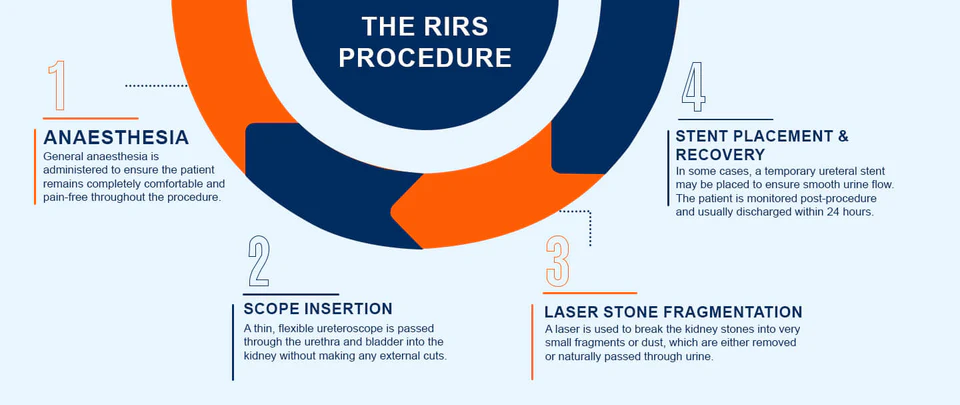
Laser stone removal is done under spinal or short general anaesthesia, so you feel no pain during the procedure. The urologist passes a slim telescope through the urine passage - no external cut is made - and locates the stone under camera vision. Depending on the stone's position, a semi-rigid ureteroscope (URSL) or a flexible scope (RIRS) is used.

A hair-thin holmium laser fibre is then advanced up to the stone and fired in controlled pulses, fragmenting it into dust and tiny pieces. Larger fragments are pulled out with a small basket; fine dust washes out with urine over the following days. The procedure typically takes 30-60 minutes depending on stone size and number.

In many cases a soft DJ stent is placed temporarily to keep the ureter open while it heals; it is removed in a short day-care visit after one to a few weeks. Most patients walk, eat and pass urine normally within hours and are discharged the same day or the next morning.

Recovery & aftercare

  • Drink 2.5-3 litres of water daily to flush out stone dust and prevent new stones
  • Mild burning or slightly blood-tinged urine for a few days is normal, especially with a stent in place
  • Resume desk work in 2-4 days; avoid heavy lifting and gym workouts for about a week
  • Complete the prescribed course of medicines and never skip the stent-removal appointment
  • Follow the diet advice given by your urologist to reduce the chance of recurrence
  • Call your Axten care coordinator immediately if you develop fever, severe pain or difficulty passing urine
Recovery and aftercare following RIRS
Recovery after kidney stone removal (laser, no cuts)

Why Axten

Care that doesn't stop at the operating table

Every kidney stone removal (laser, no cuts) package includes your surgeon's fee, OT and anaesthesia charges, hospital stay, standard medicines and post-procedure follow-ups - quoted once, in writing, before you decide.

  1. Talk with our experts

    Share your reports on a free call. A specialist reviews your case the same day.

  2. Honest fixed quote

    Receive one all-inclusive package price in writing - before you commit to anything.

  3. Insurance & paperwork

    Our insurance desk secures cashless approval and completes every formality.

  4. Your procedure

    A senior specialist operates at a partner hospital near you, on your scheduled date.

  5. Recovery & follow-ups

    Free follow-up consultations and recovery monitoring until you are fully healed.

The Axten standard

Why patients choose Axten for kidney stone removal (laser, no cuts)

For kidney stone removal (laser, no cuts), Axten focuses on the parts patients usually find stressful: confirming the right specialist, explaining the procedure clearly, locking the package price in writing and keeping recovery follow-ups organised.

NABHstandard partner hospitals
100%written package quotes
24x7care helpline access

Senior surgeon review

Your case is reviewed for clinical fit before a date or package is suggested.
One written package

Surgeon, OT, anaesthesia, stay, standard medicines and follow-ups are itemised upfront.

Insurance handled early

Cashless eligibility, TPA paperwork and EMI options are checked before admission.

Coordinator-led recovery

A care coordinator keeps follow-ups, reports and recovery instructions organised.

FAQs about kidney stone removal (laser, no cuts)

Is laser kidney stone removal painful?

No. The procedure is performed under spinal or general anaesthesia, so you feel nothing during surgery. Afterwards, most patients report only mild burning while urinating or slight discomfort for a few days, which settles with routine medicines. Because there is no incision, pain is far less than with open or keyhole surgery, and most people are back to normal activity within two to four days.

What size of kidney stone can be treated with laser?

URSL works well for ureter stones of almost any size, while RIRS is generally ideal for kidney stones up to about 1.5-2 cm. Very large or staghorn stones are usually better treated with PCNL, sometimes combined with laser. Your urologist decides after reviewing your CT scan, so the technique matches your stone's size, hardness and position for the best single-sitting clearance.

Will I need a DJ stent after laser stone surgery?

Often, yes. A soft DJ stent keeps the ureter open while it heals and lets stone dust pass easily, reducing pain and blockage after surgery. It can cause mild urgency, frequency or blood-tinged urine, which is normal. The stent is removed painlessly in a short day-care visit, usually one to four weeks later. Never forget a stent - a retained stent can itself form stones.

How soon can I return to work after laser stone removal?

Most patients resume desk jobs within two to four days and routine household activity almost immediately. We advise avoiding heavy lifting, long two-wheeler rides and strenuous gym workouts for about a week. Since there are no cuts or stitches, healing is quick. Your Axten care coordinator schedules free follow-up visits to confirm you are stone-free and recovering well before you return to full activity.

Can kidney stones come back after treatment?

Yes - without preventive care, roughly half of stone-formers develop another stone within five to ten years. Recurrence can be greatly reduced by drinking 2.5-3 litres of water daily, limiting salt, moderating non-veg protein, and treating underlying causes such as high uric acid or calcium. At Axten, stone analysis and a personalised diet plan are part of your free post-surgery follow-ups.

Is laser kidney stone surgery covered by health insurance?

Yes. URSL and RIRS are established, medically necessary procedures covered by virtually all Indian health insurance policies. Axten Hospitals offers completely cashless treatment with major insurers, and our insurance desk handles the approval paperwork for you. If you are paying yourself, you get one honest all-inclusive quote with zero surprise billing, plus easy 0% EMI options.

What is the difference between RIRS and URSL?

Both are no-cut laser procedures done through the urinary passage. URSL uses a semi-rigid scope and is ideal for stones lodged in the ureter - the tube between kidney and bladder. RIRS uses a fully flexible scope that bends inside the kidney itself, reaching stones in any calyx. Your urologist may combine both in one sitting if you have stones at multiple locations.

Is ESWL better than laser treatment for kidney stones?

ESWL avoids anaesthesia but often needs multiple sittings, works poorly on hard or larger stones, and fragments may get stuck while passing. Laser (RIRS/URSL) clears most stones in a single sitting under direct vision with higher success rates. ESWL still suits small, soft kidney stones in selected patients. Your Axten urologist will recommend whichever option genuinely fits your stone - not the costliest one.

Ready to discuss kidney stone removal (laser, no cuts)?

Free specialist consultation and an honest all-inclusive quote - no obligation.