
Senior surgeon review
Your case is reviewed for clinical fit before a date or package is suggested.

Healthy kidneys filter waste products, extra fluid and excess salts out of the blood around the clock. In kidney failure - whether sudden (acute kidney injury) or gradual (chronic kidney disease, often from diabetes and high blood pressure) - this filtering slows or stops. Wastes such as urea and creatinine build up, fluid collects in the body, and potassium can rise to dangerous levels that affect the heart.
Dialysis is a life-sustaining therapy that takes over the kidneys' filtering job. In haemodialysis, blood is gently drawn out, passed through an artificial kidney (dialyser) that removes wastes and extra fluid, and returned to the body - typically in four-hour sessions, two to three times a week. Peritoneal dialysis, done at home through a soft abdominal catheter, is an alternative for suitable patients. Dialysis is ongoing therapy, not surgery, and quality matters at every single session.
Axten Hospitals runs advanced dialysis units with modern machines, strict RO water quality standards, single-use dialysers on request, and trained nephrology teams supervising every sitting. Pricing is transparent and per-session, with honest monthly packages, zero surprise billing, cashless insurance support and a dedicated care coordinator who manages your schedule, reports and reviews.
Share your details - a care coordinator calls you back within minutes.
Kidney failure is diagnosed with simple blood tests - serum creatinine and urea, from which the eGFR (estimated filtration rate) is calculated - along with electrolytes such as potassium, haemoglobin and blood gases. Urine tests for protein and an ultrasound of the kidneys establish the type and duration of kidney disease, and whether it is potentially reversible.
The decision to start dialysis is made by a nephrologist based on eGFR (usually when it falls below about 10-15), symptoms such as fluid overload, uncontrolled potassium, severe acidosis or uraemic complications. At Axten, this decision is explained openly, along with all options - haemodialysis, peritoneal dialysis and transplant - so families choose with full understanding.
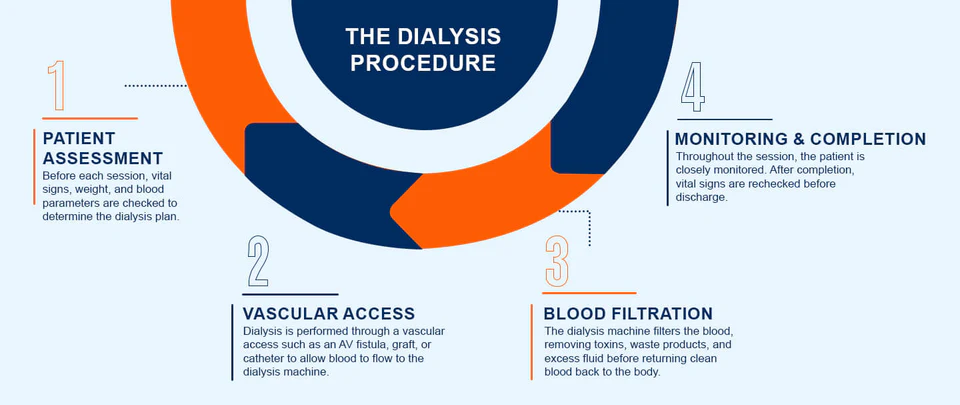
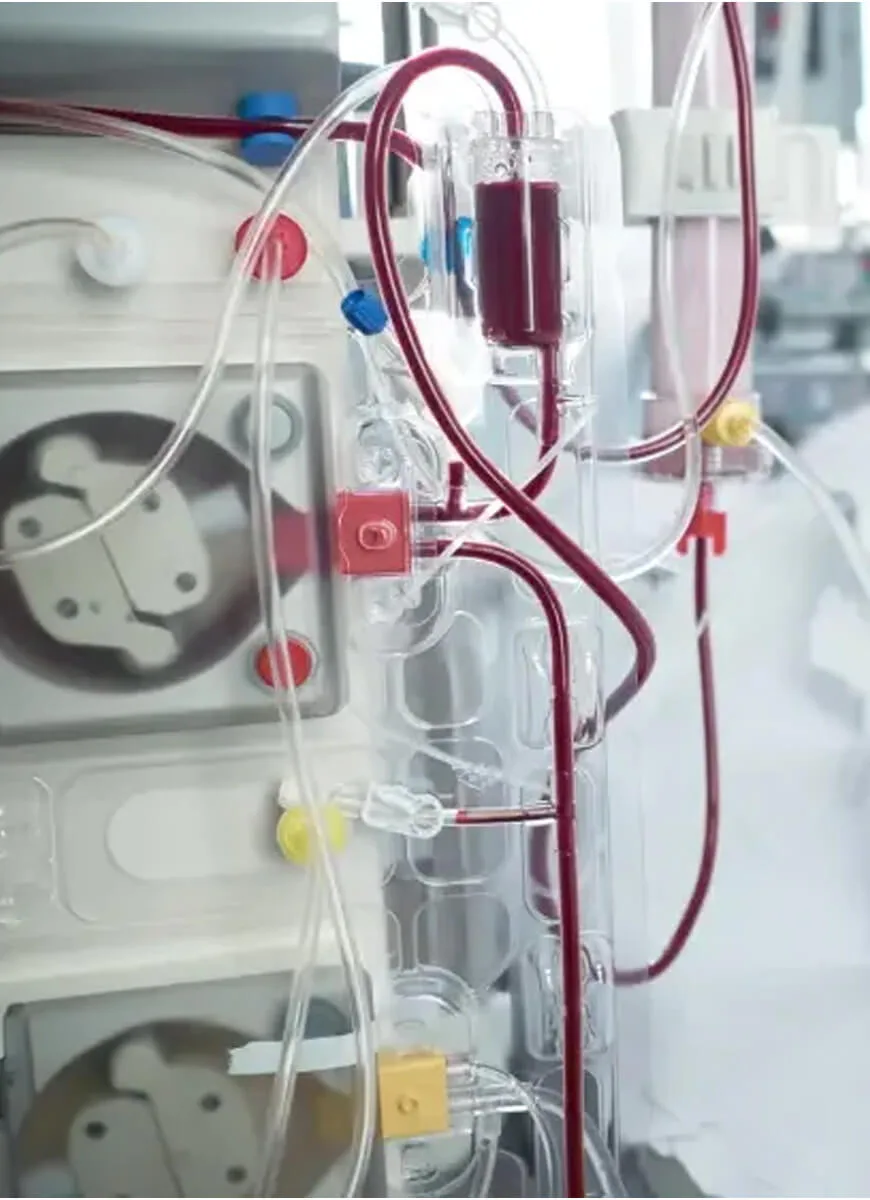
A haemodialysis session at Axten begins with a weight and blood-pressure check to calculate exactly how much fluid should be removed. You rest on a comfortable recliner while two thin needles are placed in your AV fistula (or your catheter is connected). Blood flows to the dialyser - a filter with thousands of fine hollow fibres - where wastes and excess fluid pass out into the dialysis fluid, and the cleaned blood returns to your body continuously.
Each session typically lasts about four hours, during which only a small amount of blood is outside the body at any moment. You can read, watch a screen, sleep or talk; trained dialysis technicians and nurses monitor your parameters throughout, with a nephrologist supervising the unit. Most patients need two to three sessions per week, scheduled at fixed, convenient slots.
Dialysis is an ongoing therapy rather than a one-time procedure. Your Axten care team tracks monthly blood reports, adjusts your 'dry weight' and prescription as needed, manages anaemia and bone health medicines, and coordinates transplant evaluation if you are a candidate - all under one transparent, per-session pricing structure.
Why Axten
Every kidney dialysis package includes your surgeon's fee, OT and anaesthesia charges, hospital stay, standard medicines and post-procedure follow-ups - one Fixed Honest Price, in writing, before you decide.
Share your reports on a free call (8156-92-92-92). A specialist reviews your case the same day.
Receive one all-inclusive package price in writing - before you commit to anything.
Our insurance desk secures cashless approval and completes every formality.
A senior specialist operates at a partner hospital near you, on your scheduled date.
Free follow-up consultations and recovery monitoring until you are fully healed.
The Axten standard
For kidney dialysis, Axten focuses on the parts patients usually find stressful: confirming the right specialist, explaining the procedure clearly, locking the package price in writing and keeping recovery follow-ups organised.
Your case is reviewed for clinical fit before a date or package is suggested.
Surgeon, OT, anaesthesia, stay, standard medicines and follow-ups are itemised upfront.
Cashless eligibility, TPA paperwork and EMI options are checked before admission.
A care coordinator keeps follow-ups, reports and recovery instructions organised.
Free specialist consultation and your Fixed Honest Price - no obligation.