Day-Care AV Fistula Surgery for Dialysis

Day-CareSpecialist surgeons onlyCashless insuranceFree follow-ups
Illustration explaining an AV fistula for dialysis
AV Fistula Surgery (Day Care) - specialist-led treatment at Axten

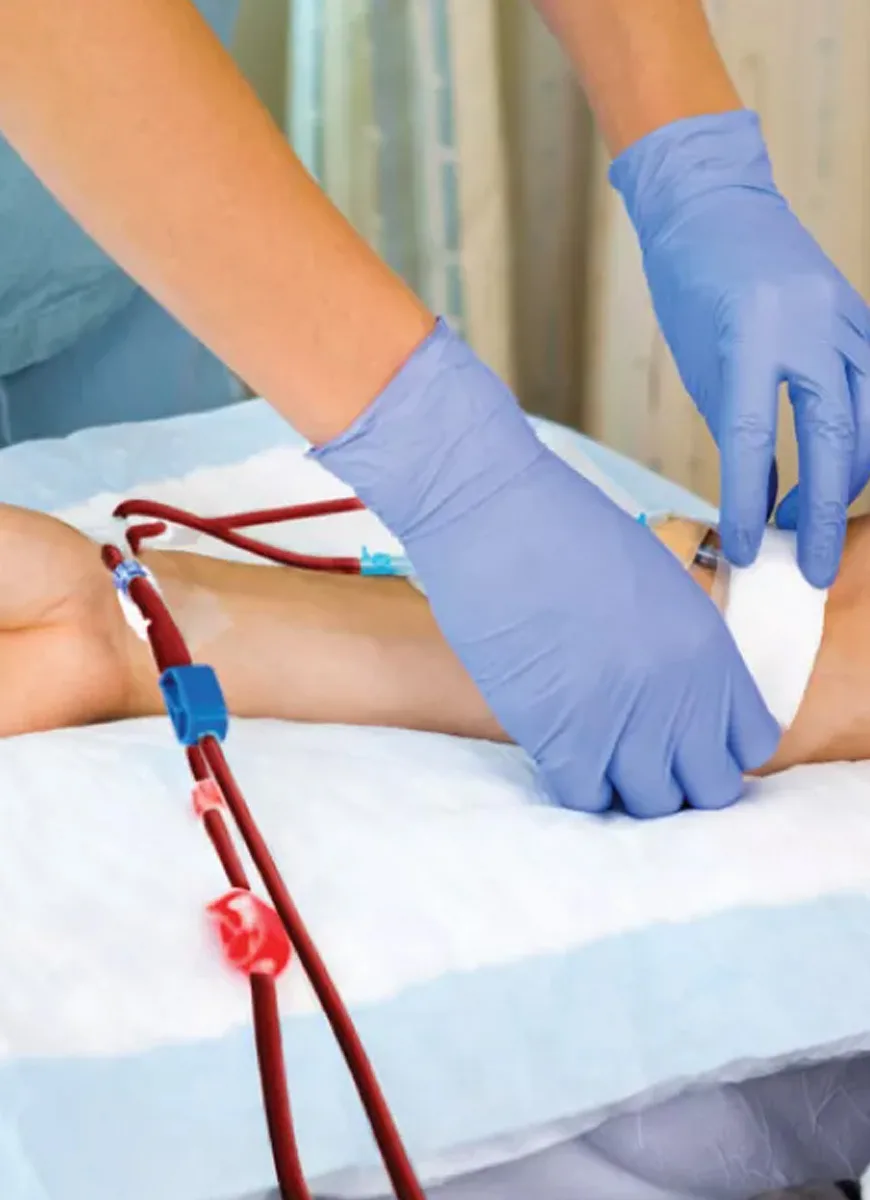
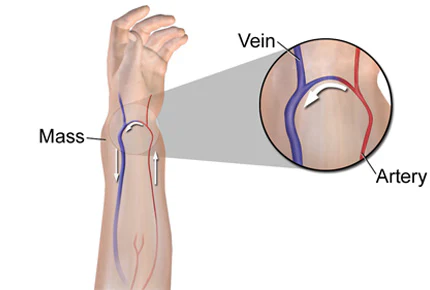
An arteriovenous (AV) fistula is a surgically created connection between an artery and a vein, usually in the forearm or upper arm. It is made for patients with advanced kidney disease who need haemodialysis. Once created, the strong arterial blood flow gradually enlarges and thickens the vein - a process called maturation - turning it into a robust, easily accessible channel through which dialysis needles can draw and return blood.

An AV fistula is considered the gold-standard dialysis access worldwide. Compared with neck catheters and artificial grafts, a mature fistula has far lower infection rates, lasts for years, delivers better dialysis blood flow and gives patients freedom from dangling catheter tubes. Because a fistula needs six to eight weeks to mature, nephrologists recommend creating it well before dialysis actually begins.

At Axten Hospitals, AV fistula creation is performed by specialist vascular surgeons as a day-care procedure under local anaesthesia - you go home the same day. You receive one honest all-inclusive price, zero surprise billing, cashless insurance support, 0% EMI options and free follow-up visits to monitor fistula maturation.

Honest all-inclusive price₹25,000 - ₹50,000 (all-inclusive, varies by site & city)See full cost breakdown

Consult for AV Fistula Surgery (Day Care)

Share your details - a care coordinator calls you back within minutes.

Country code +91 selected.

100% confidential · No spam · Honest all-inclusive quotes

Symptoms of Dialysis Access

  • Advanced chronic kidney disease (stage 4-5) with falling kidney function
  • Nephrologist has advised planning for haemodialysis
  • Currently dialysing through a neck or chest catheter and needing permanent access
  • A previous fistula that has failed, blocked or is maturing poorly
  • Recurrent catheter infections or blockages during dialysis
  • Poor dialysis blood flow through the existing access

Risks of delaying treatment

  • Starting dialysis without a fistula forces the use of neck catheters, which carry high infection and bloodstream-sepsis risk
  • Prolonged catheter use can permanently narrow central veins, making future fistula creation difficult or impossible
  • Emergency, unplanned dialysis access is riskier and costlier than a planned day-care fistula
  • Delaying after your nephrologist's advice shortens the maturation window, risking dialysis on an unready fistula

How is dialysis access diagnosed?

Planning begins with a vascular assessment of both arms. The surgeon examines your arteries and veins, checks pulses and blood pressure in each arm, and reviews your dialysis timeline with your nephrologist. The non-dominant arm is preferred so that daily activities are least disturbed.

A Doppler ultrasound vein and artery mapping study measures vessel size, depth and flow - the single most important test for choosing the best site (wrist, forearm or elbow) and predicting successful maturation. Blood tests and a fitness check complete the workup. At Axten, mapping is done by specialists and included in your all-inclusive estimate.

Benefits of day-care treatment

  • Lowest infection risk of any dialysis access - uses your own natural blood vessels
  • Lasts for years, far longer than catheters or artificial grafts
  • Delivers high blood flow, enabling shorter and more effective dialysis
  • Day-care procedure under local anaesthesia - home the same day
  • Freedom from neck catheters: bathe, dress and move without tube worries
  • Lower long-term treatment cost with fewer access-related hospital admissions

Types of av fistula surgery (day care)

Surgical & procedural options

  • Radiocephalic fistula (wrist) - the classic first-choice fistula joining the radial artery to the cephalic vein at the wrist.
  • Brachiocephalic fistula (elbow) - joins the brachial artery to the cephalic vein at the elbow when wrist vessels are unsuitable.
  • Brachiobasilic fistula with transposition - the basilic vein is joined to the brachial artery and repositioned nearer the skin surface.
  • AV graft - a soft artificial tube connects artery and vein when the patient's own veins are unsuitable for a fistula.
  • Fistuloplasty - balloon dilatation of a narrowed, poorly flowing fistula to restore its function without redoing surgery.
AV fistula creation procedure overview
How av fistula surgery (day care) is performed

How the procedure is performed

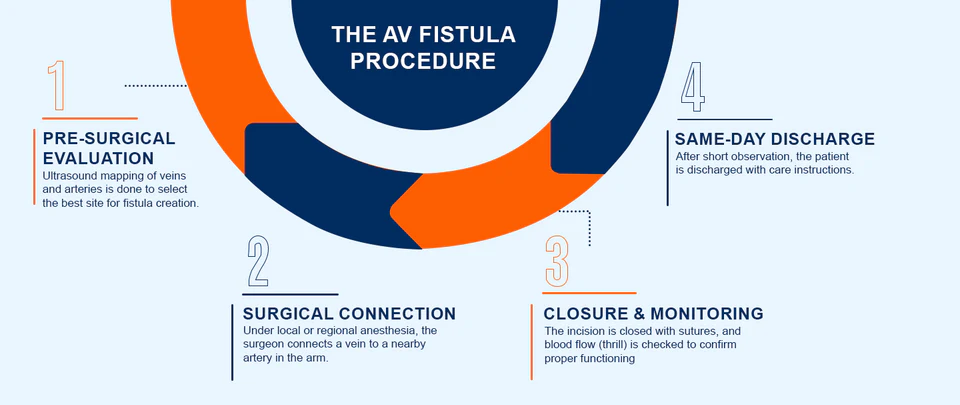
AV fistula creation is a precise microsurgical procedure performed under local anaesthesia - you remain awake and comfortable, and only the small area of the arm is numbed. Through a short incision of about 3 to 5 cm at the chosen site, the vascular surgeon carefully exposes the selected artery and vein and joins them with very fine sutures under magnification.

The connection allows high-pressure arterial blood to flow directly into the vein. The surgeon confirms a palpable buzzing sensation called a thrill - the signature of a working fistula - before closing the skin with fine stitches. The procedure takes about 60 to 90 minutes.

You go home the same day with a light dressing. Over the next six to eight weeks the vein matures - enlarging and thickening - after which the dialysis team confirms it is ready for needling. Axten's free follow-up visits track maturation, and your care coordinator stays in touch with your nephrologist throughout.

Recovery & aftercare

  • Go home the same day; keep the arm slightly elevated on a pillow for the first 2 days
  • Check the thrill (buzzing feel) over the fistula daily and report immediately if it stops
  • Do the prescribed hand-squeezing (ball-press) exercises to help the fistula mature
  • Never allow blood pressure checks, blood draws or IV lines on the fistula arm
  • Avoid tight sleeves, wristwatches and heavy lifting on the fistula arm; do not sleep on it
  • Keep the wound dry until stitches are checked at your free Axten follow-up
Recovery and aftercare following AV fistula surgery
Recovery after av fistula surgery (day care)

Why Axten

Care that doesn't stop at the operating table

Every av fistula surgery (day care) package includes your surgeon's fee, OT and anaesthesia charges, hospital stay, standard medicines and post-procedure follow-ups - quoted once, in writing, before you decide.

  1. Talk with our experts

    Share your reports on a free call. A specialist reviews your case the same day.

  2. Honest fixed quote

    Receive one all-inclusive package price in writing - before you commit to anything.

  3. Insurance & paperwork

    Our insurance desk secures cashless approval and completes every formality.

  4. Your procedure

    A senior specialist operates at a partner hospital near you, on your scheduled date.

  5. Recovery & follow-ups

    Free follow-up consultations and recovery monitoring until you are fully healed.

The Axten standard

Why patients choose Axten for av fistula surgery (day care)

For av fistula surgery (day care), Axten focuses on the parts patients usually find stressful: confirming the right specialist, explaining the procedure clearly, locking the package price in writing and keeping recovery follow-ups organised.

NABHstandard partner hospitals
100%written package quotes
24x7care helpline access

Senior surgeon review

Your case is reviewed for clinical fit before a date or package is suggested.
One written package

Surgeon, OT, anaesthesia, stay, standard medicines and follow-ups are itemised upfront.

Insurance handled early

Cashless eligibility, TPA paperwork and EMI options are checked before admission.

Coordinator-led recovery

A care coordinator keeps follow-ups, reports and recovery instructions organised.

FAQs about av fistula surgery (day care)

When should an AV fistula be made before starting dialysis?

Ideally two to four months before dialysis is expected to begin, because a new fistula needs six to eight weeks to mature before it can be needled. Your nephrologist tracks your kidney function and advises the right time. Creating the fistula early spares you a neck catheter and its infection risks when dialysis eventually starts.

Is AV fistula surgery painful and will I be admitted?

No admission is needed - at Axten it is a day-care procedure under local anaesthesia. Only a small area of your arm is numbed; you stay awake, feel no pain, and go home the same day with a light dressing. Mild soreness at the incision for a few days settles with simple oral painkillers.

How much does AV fistula surgery cost in India?

At Axten Hospitals, AV fistula creation typically costs ₹25,000 to ₹50,000 depending on the site (wrist, elbow or basilic transposition) and your city. It is one honest all-inclusive quote - surgeon, anaesthesia, procedure, medicines and free maturation follow-ups - with zero surprise billing. Cashless insurance and 0% EMI are available. Call 8156-92-92-92 for an exact estimate.

What is the thrill in an AV fistula and why must I check it daily?

The thrill is a soft buzzing vibration you feel when you place your fingers over the fistula - it is the sound of high arterial flow through the new connection and the sign of a healthy, working fistula. If the thrill weakens or disappears, the fistula may be clotting; contact Axten immediately at 8156-92-92-92, because early treatment can often save it.

How long does an AV fistula last?

A well-matured fistula commonly works for five to ten years, and many last considerably longer with good care - significantly outlasting catheters and artificial grafts. Longevity depends on protecting the arm, correct needling rotation by the dialysis team and periodic monitoring. Narrowings that develop over time can usually be fixed with a simple balloon procedure (fistuloplasty).

Why can't I just continue dialysis through my neck catheter?

Catheters are lifelines in emergencies but poor long-term companions - they carry a high risk of bloodstream infection, frequently block, deliver lower blood flows and can permanently damage the large central veins in the chest. Guidelines worldwide recommend converting to a fistula as early as possible. A fistula is safer, more effective and frees you from dangling tubes.

What if my veins are too weak for a fistula?

Doppler vein mapping identifies this before surgery. If forearm veins are small, the surgeon can move to the elbow, use the deeper basilic vein with a transposition procedure, or place a soft artificial AV graft as an alternative. Axten's vascular specialists choose the most durable option your vessels allow and explain the reasoning honestly before any procedure.

Can I use my fistula arm for daily activities?

Yes - normal activities like eating, writing, bathing and light household work are completely fine and even encouraged once the wound heals. What you must avoid on that arm: blood pressure cuffs, blood draws, IV lines, tight sleeves or watches, sleeping on it and lifting very heavy weights. These simple precautions protect the fistula for years of trouble-free dialysis.

Ready to discuss av fistula surgery (day care)?

Free specialist consultation and an honest all-inclusive quote - no obligation.