Laparoscopic Rectal Prolapse Surgery

LaparoscopicSpecialist surgeons onlyCashless insuranceFree follow-ups
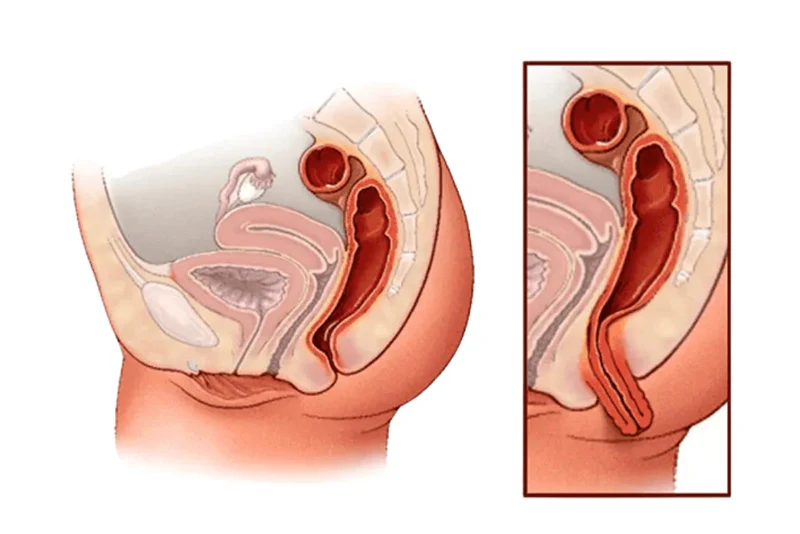
Illustration explaining rectal prolapse
Rectal Prolapse Surgery - specialist-led treatment at Axten

Rectal prolapse is a condition in which the rectum - the last portion of the large intestine - loses its attachments inside the pelvis and slides out through the anus. It may protrude only during straining at stool initially, but in advanced stages it can remain outside while walking or standing. It is most common in elderly women, though it also affects men and, in a different form, young children.

Weakness of the pelvic floor muscles is the underlying problem, aggravated by years of chronic constipation and straining, multiple childbirths, previous pelvic surgery or nerve-related muscle weakness. Beyond the distressing visible protrusion, prolapse commonly causes mucus discharge, bleeding and progressive weakening of the anal sphincter, leading to leakage of stool.

Axten Hospitals corrects rectal prolapse with laparoscopic rectopexy - a keyhole operation that lifts and secures the rectum back in its natural position, often with mesh support. Specialist colorectal surgeons only, one honest all-inclusive price, zero surprise billing, cashless insurance, 0% EMI and free post-surgery follow-ups.

Honest all-inclusive price₹90,000 - ₹1,60,000 (all-inclusive, varies by procedure & city)See full cost breakdown

Consult for Rectal Prolapse Surgery

Share your details - a care coordinator calls you back within minutes.

Country code +91 selected.

100% confidential · No spam · Honest all-inclusive quotes

Symptoms of Rectal Prolapse

  • A reddish mass protruding from the anus during or after passing stool
  • In later stages, the protrusion appears on walking, coughing or standing
  • Mucus discharge and moisture that stain undergarments
  • Bleeding from the exposed inner lining of the rectum
  • A constant sensation of incomplete evacuation or fullness
  • Progressive loss of control over gas or stool (incontinence)

Risks of delaying treatment

  • The prolapse enlarges and protrudes more frequently, eventually staying out permanently
  • Continuous stretching progressively destroys anal sphincter function, causing faecal incontinence that may not fully recover even after surgery
  • The exposed rectum can ulcerate and bleed, and rarely the prolapse can get stuck and strangulate - a surgical emergency
  • Advanced prolapse in frail patients limits surgical options to less durable procedures

How is rectal prolapse diagnosed?

Diagnosis is usually clinical - the surgeon examines the prolapse, often asking you to strain while seated on a commode, which reproduces the protrusion. Full-thickness prolapse shows characteristic circular folds, which distinguishes it from prolapsing piles. The strength of the anal sphincter is also assessed, as it influences recovery of continence.

Before surgery, a colonoscopy is generally advised to inspect the rest of the large intestine, and tests such as defecography (an imaging study of the evacuation process) or anal manometry (sphincter pressure testing) may be used in selected cases. At Axten, every recommended test is explained and included in your transparent cost estimate.

Benefits of laparoscopic treatment

  • Keyhole approach - small incisions, less pain, quick mobilisation
  • The rectum is anchored securely, giving low recurrence rates
  • Bowel control usually improves steadily after the prolapse is corrected
  • Shorter hospital stay of about 2 to 3 days for most patients
  • Constipation-relieving modifications can be combined in the same surgery
  • Well tolerated even by elderly patients when properly assessed

Types of rectal prolapse surgery

Non-surgical options

  • Dietary and bowel habit correction - high-fibre diet, fluids and laxatives to eliminate straining, mainly in early or mild cases.
  • Pelvic floor physiotherapy - exercises that strengthen supporting muscles, useful as a supplement and in patients unfit for surgery.

Surgical & procedural options

  • Laparoscopic rectopexy - keyhole surgery that lifts the rectum and fixes it to the sacrum, with or without mesh support.
  • Laparoscopic resection rectopexy - rectopexy combined with removal of a redundant sigmoid segment for patients with severe constipation.
  • Delorme's procedure - a perineal operation that plicates the prolapsed lining, suited to frail patients with smaller prolapse.
  • Altemeier's procedure - removal of the prolapsed segment through the perineum, for elderly patients unfit for abdominal surgery.
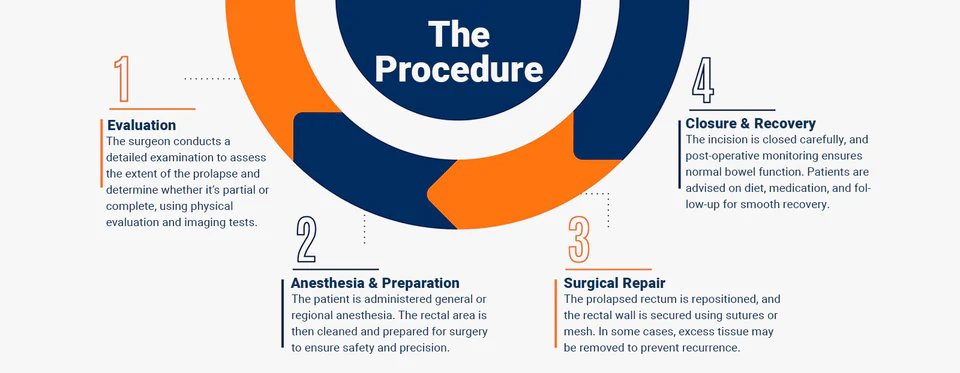
Rectal prolapse treatment process
How rectal prolapse surgery is performed

How the procedure is performed

Laparoscopic rectopexy is performed under general anaesthesia and takes about 90 to 150 minutes. Through three or four small keyhole incisions, the surgeon carefully frees the rectum from the loose surrounding attachments in the pelvis, then draws it upward into its natural anatomical position.

The rectum is then anchored to the sacrum - the firm bone at the back of the pelvis - using fine sutures, often reinforced with a soft surgical mesh (ventral mesh rectopexy) for a durable repair that preserves nerves and bowel function. In patients with long-standing severe constipation, a redundant portion of the sigmoid colon may be removed in the same operation.

Patients typically walk the next morning, resume soft diet within a day and go home in two to three days. Axten's dedicated care coordinators manage admission, cashless insurance and discharge, and free follow-ups track the return of normal bowel habits.

Recovery & aftercare

  • Walk from the first day after surgery to speed recovery and prevent complications
  • Most patients go home in 2 to 3 days and resume light routine within 2 weeks
  • Keep stools soft permanently - fibre, fluids and prescribed laxatives are essential
  • Never strain on the toilet; respond to the urge promptly and unhurriedly
  • Avoid heavy lifting and intense abdominal exercise for 6 weeks
  • Do pelvic floor exercises as taught, and attend free Axten follow-ups
Recovery and aftercare following rectal prolapse surgery
Recovery after rectal prolapse surgery

Why Axten

Care that doesn't stop at the operating table

Every rectal prolapse surgery package includes your surgeon's fee, OT and anaesthesia charges, hospital stay, standard medicines and post-procedure follow-ups - quoted once, in writing, before you decide.

  1. Talk with our experts

    Share your reports on a free call. A specialist reviews your case the same day.

  2. Honest fixed quote

    Receive one all-inclusive package price in writing - before you commit to anything.

  3. Insurance & paperwork

    Our insurance desk secures cashless approval and completes every formality.

  4. Your procedure

    A senior specialist operates at a partner hospital near you, on your scheduled date.

  5. Recovery & follow-ups

    Free follow-up consultations and recovery monitoring until you are fully healed.

The Axten standard

Why patients choose Axten for rectal prolapse surgery

For rectal prolapse surgery, Axten focuses on the parts patients usually find stressful: confirming the right specialist, explaining the procedure clearly, locking the package price in writing and keeping recovery follow-ups organised.

NABHstandard partner hospitals
100%written package quotes
24x7care helpline access

Senior surgeon review

Your case is reviewed for clinical fit before a date or package is suggested.
One written package

Surgeon, OT, anaesthesia, stay, standard medicines and follow-ups are itemised upfront.

Insurance handled early

Cashless eligibility, TPA paperwork and EMI options are checked before admission.

Coordinator-led recovery

A care coordinator keeps follow-ups, reports and recovery instructions organised.

FAQs about rectal prolapse surgery

Is rectal prolapse the same as piles?

No. Piles are swollen blood-vessel cushions that may protrude as separate small lumps, while rectal prolapse is the full thickness of the rectal wall sliding out as a single mass with circular folds. Prolapse is a structural, pelvic-floor problem needing a different operation. An examination by an Axten colorectal specialist reliably distinguishes the two conditions.

Can rectal prolapse be treated without surgery?

Established full-thickness prolapse in adults cannot be cured without surgery - the fallen rectum will not reattach itself. Fibre, laxatives and pelvic floor exercises reduce straining and slow progression, and are valuable alongside surgery, but only an operation restores normal anatomy. In small children, however, prolapse often resolves with conservative bowel management alone.

What is the best operation for rectal prolapse?

For most fit adults, laparoscopic ventral mesh rectopexy is considered the modern operation of choice - it secures the rectum durably, preserves nerves, improves continence and has low recurrence. Frail or very elderly patients may be better served by a perineal procedure such as Delorme's. Axten's specialists recommend the option matched to your age, fitness and prolapse severity.

How much does rectal prolapse surgery cost in India?

At Axten Hospitals, laparoscopic rectal prolapse surgery typically costs ₹90,000 to ₹1,60,000 depending on the procedure chosen and your city. You receive one honest all-inclusive quote - surgeon, anaesthesia, theatre, mesh if used, room, medicines and follow-ups - with zero surprise billing. Cashless insurance and 0% EMI are available. Call 8156-92-92-92 for details.

Will my bowel control improve after prolapse surgery?

In most patients, yes. Once the prolapse stops stretching the sphincter, muscle tone gradually recovers and continence improves over three to six months in the majority of cases. Improvement is greatest when surgery is done early, before years of stretching cause permanent sphincter damage - one more reason not to delay consultation for this condition.

Is laparoscopic rectopexy safe for elderly patients?

Yes, in properly assessed patients. The keyhole approach involves small incisions, minimal blood loss and early walking, all of which suit older patients. Axten's anaesthetists evaluate heart, lung and kidney fitness beforehand. For the very frail, perineal procedures done under regional anaesthesia offer a safe alternative, and your surgeon will advise honestly which suits you.

Can rectal prolapse come back after surgery?

Recurrence after laparoscopic rectopexy is low - around 2 to 5 percent over the long term, compared with higher rates after perineal procedures. Protect your repair by keeping stools soft for life, never straining, staying active and doing pelvic floor exercises. Axten's free follow-up visits allow your surgeon to detect and address any early concern.

What tests are needed before rectal prolapse surgery?

A colonoscopy is generally advised to examine the rest of the large intestine before repair. Selected patients need defecography to study the mechanics of evacuation or anal manometry to measure sphincter strength, plus routine fitness tests for anaesthesia. Every recommended test is explained by your Axten specialist and included upfront in your all-inclusive estimate.

Ready to discuss rectal prolapse surgery?

Free specialist consultation and an honest all-inclusive quote - no obligation.