
FUE/DHI Hair Transplant

FUE/DHISpecialist surgeons onlyCashless insuranceFree follow-ups
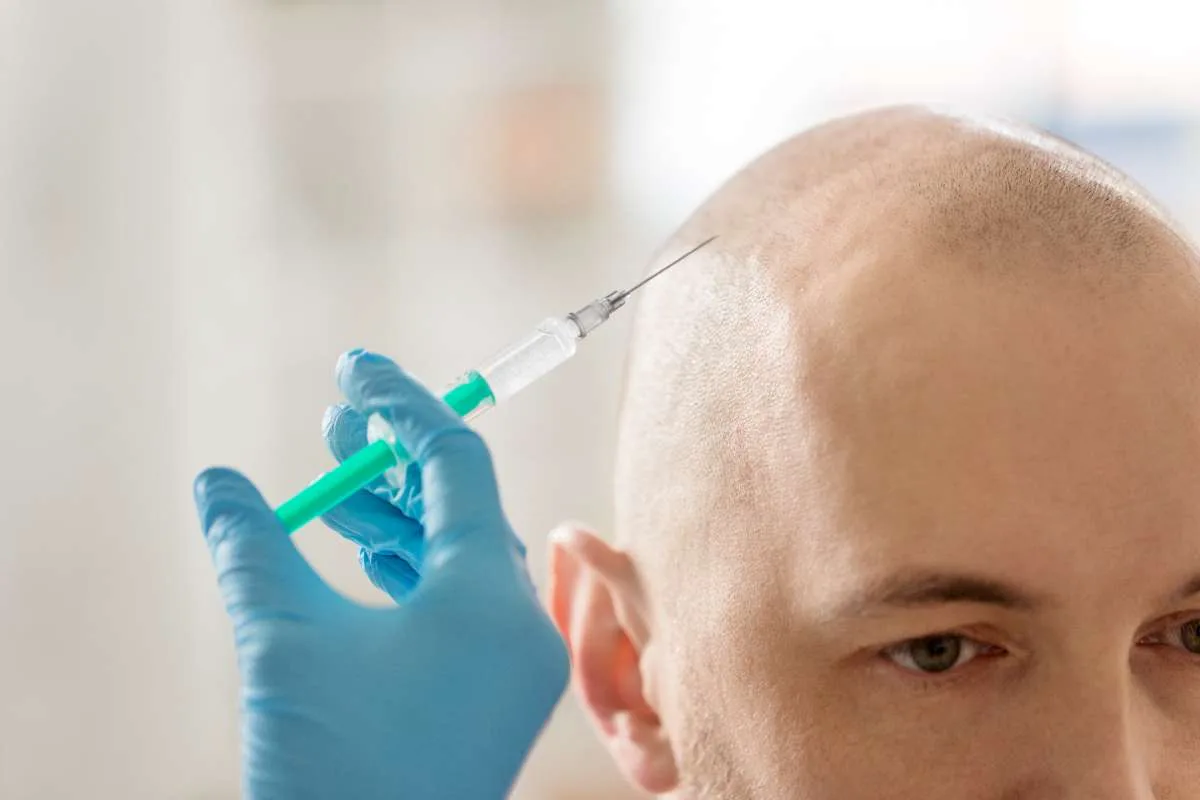
Hair transplant procedure being performed
Hair Transplant - specialist-led treatment at Axten

Hair loss and baldness most commonly result from androgenetic alopecia - pattern hair loss driven by genetics and the hormone DHT, which gradually shrinks hair follicles on the crown and hairline. It affects a majority of men by middle age and many women too. Stress, nutritional deficiencies, thyroid problems and certain illnesses can accelerate shedding, but pattern baldness is by far the leading cause of permanent hair loss.

A hair transplant permanently restores hair by relocating your own DHT-resistant follicles from the back and sides of the scalp (the 'safe donor zone') to thinning or bald areas. Because these follicles are genetically immune to balding, the transplanted hair keeps growing for life. Modern FUE and DHI techniques extract and implant individual follicular units, leaving no linear scar and creating natural, undetectable density and hairline design.

At Axten Hospitals, transplants are planned and led by specialist surgeons - not technicians alone - with honest graft counts, transparent per-graft pricing and zero surprise billing. A dedicated care coordinator guides you through the day-care procedure, 0% EMI makes payment easy, and free structured follow-ups track your growth from the first month to the final result.

Honest all-inclusive price₹60,000 - ₹1,80,000 (all-inclusive, varies by graft count, technique & city)See full cost breakdown

Consult for Hair Transplant

Share your details - a care coordinator calls you back within minutes.

Country code +91 selected.

100% confidential · No spam · Honest all-inclusive quotes

Symptoms of Hair Loss & Baldness

  • Receding hairline forming an 'M' shape at the temples
  • Progressive thinning or a widening bald patch at the crown
  • Visible scalp through hair under bright light
  • Excess hair on the pillow, comb or shower drain
  • Widening of the central parting line, especially in women
  • Patchy beard or eyebrow hair loss
  • Loss of confidence, looking older than one's age

Risks of delaying treatment

  • Pattern baldness is progressive - waiting means a larger bald area needing more grafts, sessions and cost later
  • The donor area is finite; advanced baldness may exceed what your donor supply can realistically cover
  • Prolonged thinning ages the face prematurely and can steadily erode confidence in professional and social life
  • Untreated underlying causes such as thyroid disease or severe deficiencies continue to weaken existing hair
Illustration showing common patterns of hair loss
Understanding hair loss & baldness

How is hair loss & baldness diagnosed?

Assessment begins with a scalp examination and trichoscopy - a magnified digital analysis that measures hair density, follicle miniaturisation and the exact stage of loss on the Norwood scale (men) or Ludwig scale (women). The surgeon evaluates your donor area quality, estimates the grafts needed and designs a realistic, age-appropriate hairline.

Blood tests screen for correctable contributors: thyroid disorders, iron and vitamin D or B12 deficiency, and blood sugar. Sudden patchy loss or scarring alopecia needs dermatological treatment first, since transplanting into an unstable scalp gives poor results. This honest evaluation ensures surgery is advised only when it will genuinely work for you.

Benefits of fue/dhi treatment

  • Permanent, natural hair that grows, and can be cut and styled, for life
  • FUE/DHI leaves no linear scar - donor area heals within days
  • Natural hairline designed to suit your face and age
  • Comfortable day-care procedure under local anaesthesia - no admission
  • Minimal downtime - back to desk work within 2-3 days
  • Restores a younger look and lasting self-confidence

Types of hair transplant

Non-surgical options

  • Minoxidil solution/foam - a topical stimulant that slows shedding and thickens existing miniaturised hair.
  • Finasteride tablets - a DHT-blocking medicine for men that stabilises pattern loss with continued use.
  • PRP therapy - injections of your own platelet-rich plasma to strengthen thinning hair and support transplant results.
  • Low-level laser therapy - light-based stimulation that modestly improves hair calibre in early thinning.

Surgical & procedural options

  • FUE (Follicular Unit Excision) - individual follicular units are punched out from the donor area and implanted into pre-made sites; no linear scar.
  • DHI (Direct Hair Implantation) - grafts are loaded into a pen-like implanter and placed directly, giving dense packing and precise angle control.
  • FUT (strip method) - a strip of donor scalp provides large graft numbers in one session, leaving a thin linear scar; chosen in select cases.
  • Beard and eyebrow transplant - FUE grafts used to restore patchy beards, moustaches or over-plucked eyebrows.
  • Combined mega-session - FUE plus body/beard donor hair for advanced baldness needing very high graft numbers.

How the procedure is performed

A hair transplant at Axten is a day-care procedure under local anaesthesia - you remain awake, can chat, take breaks and even watch a screen. After hairline design and donor trimming, the scalp is numbed. In FUE, the surgeon uses a fine micro-punch (0.8-0.95 mm) to extract individual follicular units from the back of the head, which are preserved in a chilled holding solution.

The recipient area is then prepared: tiny sites are created at precise angles and directions matching natural hair growth - this artistic step determines how natural the result looks. Grafts are implanted one by one; in DHI, a Choi implanter pen places each graft directly without pre-made sites, allowing denser packing, especially useful in unshaven or crown work.

A session of 2,000-3,500 grafts takes about 5-8 hours including breaks. There are no stitches and no bandage on the recipient area. You go home the same evening with simple instructions, a head-wash demonstration at your first free follow-up, and medicines to prevent swelling and infection.

Recovery & aftercare

  • Sleep with your head elevated on two pillows for the first 3-4 nights to minimise forehead swelling
  • Begin gentle saline spraying and the demonstrated head-wash routine from day 2-3
  • Tiny scabs around each graft flake off naturally by day 10-14 - never pick at them
  • Return to desk work in 2-3 days; avoid gym, swimming and helmets for 3-4 weeks
  • Expect 'shock shedding' of transplanted hair around weeks 3-6 - this is normal; new growth starts by month 3-4
  • Attend free Axten follow-ups at regular milestones; full density develops by 10-12 months

Why Axten

Care that doesn't stop at the operating table

Every hair transplant package includes your surgeon's fee, OT and anaesthesia charges, hospital stay, standard medicines and post-procedure follow-ups - quoted once, in writing, before you decide.

  1. Talk with our experts

    Share your reports on a free call. A specialist reviews your case the same day.

  2. Honest fixed quote

    Receive one all-inclusive package price in writing - before you commit to anything.

  3. Insurance & paperwork

    Our insurance desk secures cashless approval and completes every formality.

  4. Your procedure

    A senior specialist operates at a partner hospital near you, on your scheduled date.

  5. Recovery & follow-ups

    Free follow-up consultations and recovery monitoring until you are fully healed.

The Axten standard

Why patients choose Axten for hair transplant

For hair transplant, Axten focuses on the parts patients usually find stressful: confirming the right specialist, explaining the procedure clearly, locking the package price in writing and keeping recovery follow-ups organised.

NABHstandard partner hospitals
100%written package quotes
24x7care helpline access

Senior surgeon review

Your case is reviewed for clinical fit before a date or package is suggested.
One written package

Surgeon, OT, anaesthesia, stay, standard medicines and follow-ups are itemised upfront.

Insurance handled early

Cashless eligibility, TPA paperwork and EMI options are checked before admission.

Coordinator-led recovery

A care coordinator keeps follow-ups, reports and recovery instructions organised.

FAQs about hair transplant

Is a hair transplant permanent?

Yes. Transplanted follicles come from the back and sides of your scalp, where hair is genetically resistant to the balding hormone DHT. They retain this resistance in their new position, so the hair keeps growing for life. Medicines may still be advised to protect your existing, non-transplanted hair from further thinning.

Does a hair transplant look natural?

A well-executed transplant is undetectable. Naturalness depends on an age-appropriate hairline design, correct angles and direction of each graft, and using single-hair grafts along the front edge. At Axten, specialist surgeons design and supervise every case, so your result looks like your own hair - because it is your own hair.

Is the procedure painful?

The only discomfort is the initial numbing injections, which take a few minutes and are eased with vibration and fine needles. After that, the entire extraction and implantation is painless - most patients relax, watch films or nap. Mild soreness and tightness for a day or two afterwards settles with simple painkillers.

When will I see the full result?

Transplanted hairs typically shed in weeks 3-6 (shock loss), which is completely normal. New growth begins around month 3-4, noticeable coverage appears by month 6, and the final density and texture mature at 10-12 months. Axten's free follow-up schedule tracks your progress at each milestone with photographs.

How many grafts will I need?

It depends on your stage of baldness and desired density: a receding hairline may need 1,500-2,000 grafts, moderate frontal loss 2,000-3,000, and advanced baldness 3,000-4,500 or staged sessions. Your surgeon counts and quotes honestly after trichoscopy - Axten never inflates graft numbers, and pricing is transparent per graft.

What is the difference between FUE and DHI?

Both extract follicles individually without a linear scar. In FUE, tiny recipient sites are made first, then grafts are placed. In DHI, a pen-like implanter inserts each graft directly, giving finer control over angle and denser packing, often without shaving the recipient area. Your surgeon recommends the technique - or a combination - that suits your case.

What does a hair transplant cost in India?

At Axten Hospitals, a transplant costs roughly ₹60,000 to ₹1,80,000 depending on graft count, technique (FUE or DHI) and city, quoted transparently per graft. The all-inclusive price covers the surgeon-led procedure, medicines, first head-wash and all follow-up reviews - zero surprise billing, with 0% EMI available. Call 8156-92-92-92 for an assessment.

Am I too young or too old for a hair transplant?

There is no fixed age limit. Surgeons are cautious below 24-25 because the balding pattern is still evolving, and may first stabilise loss with medicines. Healthy adults in their 50s and 60s get excellent results if the donor area is good. A trichoscopy assessment at Axten gives you an honest, personalised answer.

Ready to discuss hair transplant?

Free specialist consultation and an honest all-inclusive quote - no obligation.