Endoscopic Septoplasty - Straighten the Septum, Breathe Freely

EndoscopicSpecialist surgeons onlyCashless insuranceFree follow-ups
Septoplasty consultation for a deviated nasal septum
Septoplasty - specialist-led treatment at Axten

The nasal septum is the wall of cartilage and thin bone that divides the nose into two passages. In many people it is bent or off-centre - from birth, growth patterns or an old injury - and when the deviation is significant, it narrows one or both airways. The result is a persistently blocked nose, mouth breathing, snoring, disturbed sleep and repeated sinus infections, because mucus cannot drain past the obstruction properly.

Septoplasty is the corrective operation: the surgeon straightens the septum from within the nostrils, removing or reshaping only the bent portions of cartilage and bone while preserving the septum's supporting framework. Performed endoscopically at Axten, the surgery involves no external cuts, no change to the shape of your nose and no visible sign that surgery was ever done - just two open airways.

Axten Hospitals' specialist ENT surgeons perform endoscopic septoplasty as a short procedure with modern dissolvable packing, so recovery is quick and comfortable. You get one honest, all-inclusive price with zero surprise billing, cashless insurance support, 0% EMI options, a dedicated care coordinator and free post-surgery follow-ups until your breathing result is confirmed.

Honest all-inclusive price₹45,000 - ₹85,000 (all-inclusive; varies by turbinate work, technique & city)See full cost breakdown

Consult for Septoplasty

Share your details - a care coordinator calls you back within minutes.

Country code +91 selected.

100% confidential · No spam · Honest all-inclusive quotes

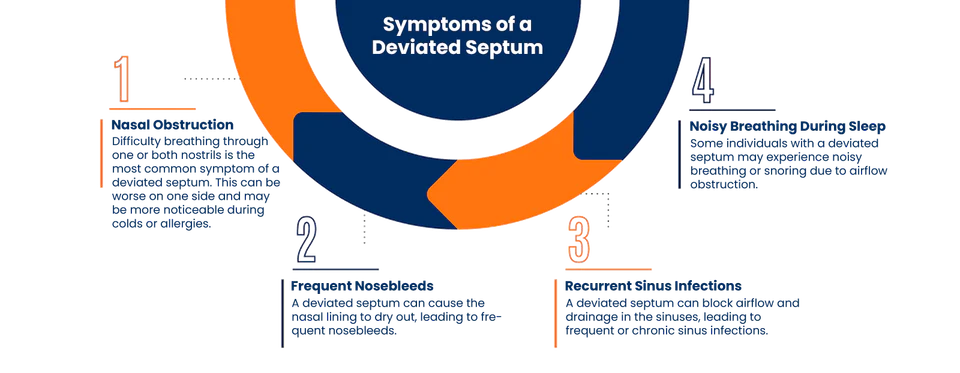
Symptoms of Deviated Nasal Septum

  • Persistent blockage of one or both nostrils, worse on lying down
  • Mouth breathing, dry mouth and disturbed sleep
  • Loud snoring noticed by family members
  • Recurrent sinus infections or facial heaviness
  • Frequent nosebleeds from the dry, deviated edge
  • Reduced airflow noticed during exercise or exertion
  • Headaches related to internal nasal blockage

Risks of delaying treatment

  • Chronic mouth breathing dries the throat and worsens snoring and sleep quality year after year
  • Blocked sinus drainage from the deviation invites repeated sinus infections
  • Long-term poor sleep from nasal obstruction affects daytime energy, mood and blood pressure
  • Recurrent nosebleeds from the deviated edge continue and can worsen with age
Symptoms associated with a deviated nasal septum
Understanding deviated nasal septum

How is deviated nasal septum diagnosed?

A deviated septum is diagnosed on clinical examination: anterior rhinoscopy and nasal endoscopy show the site and severity of the bend, whether bony spurs are touching the side wall, and whether the turbinates - the nose's internal air-conditioning ridges - are compensatorily enlarged and also need reduction during the same surgery.

The surgeon correlates findings with your symptoms, since not every deviation needs correction - only those genuinely causing obstruction, nosebleeds or sinus blockage. A CT scan is added when chronic sinusitis coexists, and a sleep study is considered when snoring or suspected sleep apnoea is a major complaint.

Benefits of endoscopic treatment

  • Restores free breathing through both nostrils, day and night
  • No external cuts and no change to the nose's outward shape
  • Snoring and sleep quality typically improve once the airway opens
  • Reduces recurrent sinus infections by restoring normal drainage
  • Short 30-60 minute surgery with same-day or next-morning discharge
  • Modern dissolvable packing makes recovery far more comfortable than older methods

Types of septoplasty

Non-surgical options

  • Steroid nasal sprays and antihistamines - shrink swollen linings and help mild blockage, though they cannot straighten cartilage
  • Saline nasal rinses - keep passages moist and clear, easing symptoms in minor deviations
  • Nasal dilator strips - mechanical aids that may reduce snoring temporarily in mild cases

Surgical & procedural options

  • Endoscopic septoplasty - the bent cartilage and bone are precisely reshaped under endoscopic vision through the nostrils, with no external cut
  • Septoplasty with turbinate reduction - enlarged turbinates are shrunk (often with coblation) in the same sitting for a fully open airway
  • Septorhinoplasty - combined correction of the septum and the external shape of the nose when both function and appearance need attention
  • SMR (submucous resection) - the older technique of removing deviated portions, still useful in selected severe deviations

How the procedure is performed

Endoscopic septoplasty is performed under general anaesthesia (local anaesthesia with sedation is an option for some adults) and takes about 30-60 minutes. All work happens inside the nose through a small internal incision in the septum's lining - nothing on the skin, so the operation leaves no visible trace.

The surgeon gently lifts the lining off the septum, removes or reshapes only the deviated segments of cartilage and bone, and lays the lining back in place - the straightened septum heals in its new, midline position. The endoscope's magnified view allows precise correction of even posterior deviations and sharp bony spurs that older headlight techniques could miss. If the turbinates are enlarged, they are reduced in the same sitting.

Fine dissolvable splints or packing support the septum for the first days without the painful ribbon packs of the past. Most patients go home the same day or the next morning and breathe noticeably better within one to two weeks as internal swelling subsides.

Recovery & aftercare

  • Mild blockage and blood-tinged discharge for the first week is part of normal healing
  • Do not blow your nose for the first week; sneeze with your mouth open
  • Sleep with your head slightly elevated for a few nights to reduce swelling
  • Start saline sprays or rinses as instructed to keep the healing lining moist
  • Avoid heavy exercise, swimming and dusty environments for about two weeks
  • Attend your free follow-up so the surgeon can confirm a straight, well-healed septum

Why Axten

Care that doesn't stop at the operating table

Every septoplasty package includes your surgeon's fee, OT and anaesthesia charges, hospital stay, standard medicines and post-procedure follow-ups - quoted once, in writing, before you decide.

  1. Talk with our experts

    Share your reports on a free call. A specialist reviews your case the same day.

  2. Honest fixed quote

    Receive one all-inclusive package price in writing - before you commit to anything.

  3. Insurance & paperwork

    Our insurance desk secures cashless approval and completes every formality.

  4. Your procedure

    A senior specialist operates at a partner hospital near you, on your scheduled date.

  5. Recovery & follow-ups

    Free follow-up consultations and recovery monitoring until you are fully healed.

The Axten standard

Why patients choose Axten for septoplasty

For septoplasty, Axten focuses on the parts patients usually find stressful: confirming the right specialist, explaining the procedure clearly, locking the package price in writing and keeping recovery follow-ups organised.

NABHstandard partner hospitals
100%written package quotes
24x7care helpline access

Senior surgeon review

Your case is reviewed for clinical fit before a date or package is suggested.

One written package

Surgeon, OT, anaesthesia, stay, standard medicines and follow-ups are itemised upfront.

Insurance handled early

Cashless eligibility, TPA paperwork and EMI options are checked before admission.

Coordinator-led recovery

A care coordinator keeps follow-ups, reports and recovery instructions organised.

FAQs about septoplasty

How do I know my blocked nose is due to a deviated septum?

Typical clues are blockage that is worse on one side, persists year-round rather than only in allergy season, and improves little with sprays. Confirmation is simple: an ENT surgeon performs nasal endoscopy in the clinic and directly sees the deviation, spurs and turbinate enlargement. At Axten, this examination clarifies within minutes whether septoplasty would genuinely help you.

Will septoplasty change the shape of my nose?

No. Septoplasty works entirely inside the nose on the internal dividing wall, preserving the framework that supports the nose's external shape - your appearance stays exactly the same. If you also want a cosmetic change, that is a combined operation called septorhinoplasty, which can be planned openly with your surgeon. Standard septoplasty leaves no visible sign of surgery at all.

Is septoplasty painful, and is the packing removal terrible?

The surgery itself is painless under anaesthesia, and afterwards most patients report pressure and blockage rather than significant pain, controlled with simple tablets. The infamous agony of ribbon-pack removal belongs to the past - Axten uses dissolvable packing and soft splints that either melt away or slide out easily at the first dressing visit, making recovery genuinely comfortable.

How soon will I breathe better after septoplasty?

Expect the nose to feel more blocked in the first week - internal swelling and healing splints do that. As swelling subsides, breathing improves noticeably by the second week, and the full benefit is usually felt by four to six weeks. Most patients return to desk work in three to five days and describe the eventual open-nose feeling as life-changing.

What is the right age for septoplasty? Can teenagers have it?

Septoplasty is usually deferred until facial growth is complete - around seventeen years in boys and sixteen in girls - because the septum contributes to nasal growth. In severe obstruction affecting sleep or ear health, a conservative correction can be done earlier by an experienced surgeon. There is no upper age limit; fit older adults undergo the surgery comfortably.

Will septoplasty cure my snoring and sleep problems?

If nasal blockage is the main driver, straightening the septum usually reduces snoring and improves sleep quality significantly. However, snoring often has multiple contributors - throat anatomy, weight, and sleep apnoea among them. Axten surgeons assess the whole airway and, when needed, recommend a sleep study first, so you know honestly how much improvement septoplasty alone can deliver.

Can a deviated septum bend again after surgery?

Once corrected and healed, the septum stays straight in the vast majority of patients - recurrence is uncommon and usually linked to fresh nasal injury or, rarely, the natural memory of cartilage causing a minor re-bend. Protecting the nose from trauma during the first months matters most. Free follow-up endoscopy at Axten confirms the septum has healed straight.

Is septoplasty covered by insurance, and what does the package include?

Yes - septoplasty for a symptomatic deviated septum is a functional, medically necessary surgery covered by most health insurance policies, and our desk arranges cashless approval. Axten's honest all-inclusive package covers surgeon and anaesthetist fees, endoscopic equipment, theatre, room, medicines, consumables and routine tests - zero surprise billing, 0% EMI available, free follow-ups included. Call 8156-92-92-92 to book.

Ready to discuss septoplasty?

Free specialist consultation and an honest all-inclusive quote - no obligation.