
Health insights
Gallstones: Symptoms, Treatment and Laparoscopic Gallbladder Removal
Know the signs of gallstones, when surgery is needed, how laparoscopic gallbladder removal works, and what life is like afterwards.
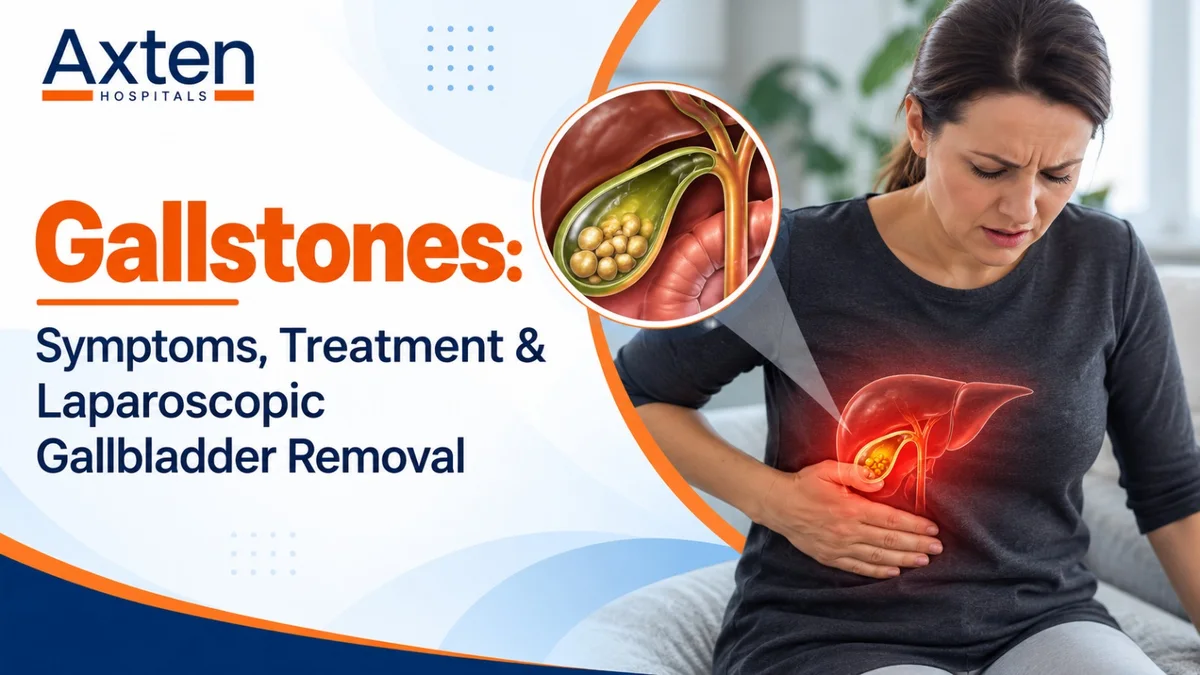
Plenty of people have gallstones and never know it. Others get sharp pain after meals that keeps coming back. If that sounds familiar, you probably want to know whether it's serious, whether you need surgery, and what life looks like afterwards.
What are gallstones?
The gallbladder is a small pouch under the liver on the upper right side of the belly. It stores bile, which helps digest fat. When bile holds too much cholesterol or other material, it can harden into stones, from the size of a grain of sand to a golf ball. You're more likely to get them if you:
-
Are a woman, or over 40
-
Are overweight, or lose weight very quickly
-
Have had pregnancies, or take hormone medicines
-
Have diabetes
-
Have gallstones in the family
Symptoms
Most gallstones are silent. When a stone blocks the outlet of the gallbladder, you can get a gallbladder attack:
-
Pain in the upper right or upper middle belly
-
Pain that may spread to the back or right shoulder blade
-
Pain that often starts after a heavy or fatty meal
-
Pain that lasts from 30 minutes to a few hours, then settles
-
Nausea or vomiting, bloating or indigestion
Get help now: Go to the emergency room now if the pain lasts more than a few hours, or comes with fever or chills, yellow skin or eyes, or dark urine with pale stool. Severe pain that spreads to the back with repeated vomiting also needs urgent care. These can be signs of an infected gallbladder, a blocked bile duct or an inflamed pancreas.
What can go wrong
If stones keep causing symptoms, they can lead to an inflamed and infected gallbladder (cholecystitis), a stone in the bile duct that causes jaundice, infection of the bile duct (cholangitis), or inflammation of the pancreas (pancreatitis), which can be serious. This is why repeated attacks shouldn't be ignored.
How gallstones are diagnosed
An ultrasound of the belly is the main test, and it shows stones clearly. Blood tests check liver function and signs of infection. If a stone may have moved into the bile duct, you may need an MRCP (a special MRI) or an ERCP, where a thin telescope is used to look at and clear the duct.
Does everyone need surgery?
No. If stones were found by chance and cause no trouble, most people only need to keep watch. Surgery is usually advised once there are symptoms or complications, because attacks tend to come back.
Can gallstones be treated without surgery?
Medicine can dissolve some small cholesterol stones, but it takes many months, stones often return after it is stopped, and it suits very few people. Liver flush drinks and home remedies have no good proof behind them, and some can cause pain. A lower-fat diet may mean fewer attacks, but the stones stay. If you keep having attacks, surgery is usually the safest route.
How the gallbladder is removed
The operation is called laparoscopic cholecystectomy, one of the most common keyhole operations in the world. You're asleep under general anaesthesia. The surgeon makes three or four small cuts, fills the belly with a safe gas, and uses a camera and fine instruments to separate the gallbladder from the liver and take it out through one of the cuts. It usually takes 45 to 90 minutes.
SILS (single-incision laparoscopic surgery) uses just one small cut, usually hidden in the belly button. The scar can be less visible. It doesn't suit everyone, for example when the gallbladder is badly inflamed or there has been earlier belly surgery. In a few cases, because of heavy inflammation or scarring, the surgeon switches to an open cut for safety.
Recovery
-
Most people go home the next day, and some the same day.
-
Walk the same day or the next. It helps recovery.
-
Light food is usually fine within hours.
-
Pain at the cuts and shoulder pain from the gas are common for a day or two.
-
Desk work is often possible in about a week. Avoid heavy lifting and hard exercise for 2 to 4 weeks, or as your surgeon advises.
Call your doctor if you have fever, yellow eyes, worsening belly pain, repeated vomiting, or redness and pus at a cut.
Risks
Gallbladder surgery is common and safe in experienced hands, but every operation has risks: infection, bleeding and bile leak. Injury to the bile duct is rare but serious, and one reason to have the operation with an experienced team. Your surgeon will go through these risks before you sign the consent form.
Life without a gallbladder
Your liver keeps making bile, and it now flows straight into the intestine. Some people have loose stools or bloating for a few weeks, and it usually settles. For the first few weeks, eat smaller, lighter meals and go slowly with oily, fried food. After that, most people can eat a normal balanced diet.
Common questions
Where is gallbladder pain felt? Usually in the upper right or upper middle belly, and sometimes in the back or the right shoulder.
Can gallstones go away on their own? They don't usually disappear. A small stone can slip into the bile duct and cause serious trouble, so don't ignore repeated pain.
Is the surgery safe if I have diabetes? In most cases, yes, with proper planning. Tell your surgeon about your diabetes and all your medicines.
Will I need medicines for life afterwards? Most people don't need any long-term medicine after gallbladder removal.
Can I lower my chance of gallstones? Steady weight loss (not crash diets), regular meals, fibre-rich food and staying active all help.
Have questions or want to see a specialist? For appointment and queries, call 8156929292. AXTEN HOSPITALS - HONEST SURGERY, HONEST CARE.