
Health insights
Piles (Bawasir): Symptoms, Causes, Grades and Treatment Options
Piles are common. Read about symptoms, causes, grades and treatment, from simple home care to surgery, and when it is time to see a doctor.
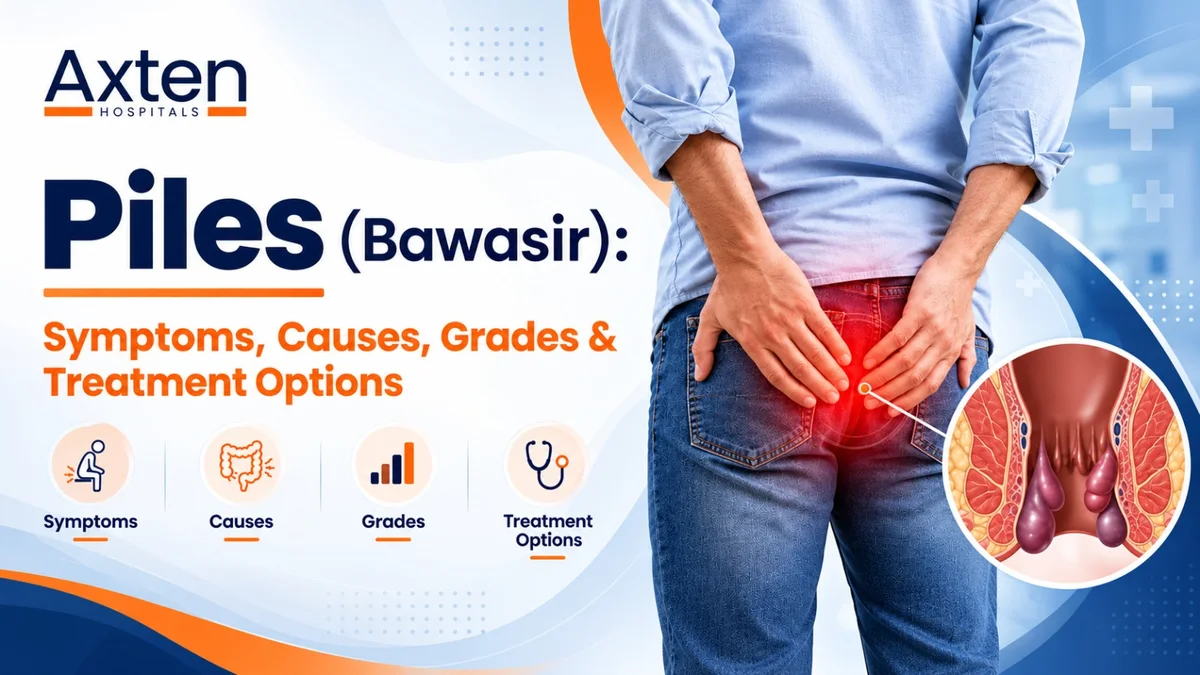
Piles, or bawasir, are one of the most common problems doctors see, and one of the least talked about. Many people feel too shy to ask for help and wait for months. By then a small problem has often become a painful one. Most piles can be managed, and a good number never need surgery.
What are piles?
Piles (also called haemorrhoids) are swollen cushions of tissue and blood vessels in the lower rectum and around the anus. Everyone has these cushions. They only cause trouble when they swell or slip down.
-
Internal piles sit inside the anus. They usually don't hurt, but they can bleed.
-
External piles sit under the skin around the anus. They can itch, ache or feel like a lump.
Symptoms of piles
-
Bright red blood on the toilet paper, in the bowl or on the stool
-
Itching or irritation around the anus
-
A soft lump near the anus, or tissue that comes out when you pass stool
-
A feeling that your bowel hasn't emptied fully
-
Mucus leaking from the anus
-
A sudden, hard and painful lump, which can be an external pile with a clot in it
Sharp pain while passing stool is more often an anal fissure, a small tear in the skin. Piles are usually not very painful unless a clot forms. Only an examination can tell the two apart.
Grades of piles
Doctors grade internal piles from 1 to 4. The grade helps decide the treatment.
| Grade | What happens |
|---|---|
| 1 | Bleeding, but the pile does not come out |
| 2 | Comes out when you pass stool, then goes back by itself |
| 3 | Comes out and has to be pushed back with a finger |
| 4 | Stays out and cannot be pushed back |
Why do piles form?
Piles form when pressure builds up in the veins around the anus. Common triggers:
-
Straining, constipation or long-term loose stools
-
Sitting on the toilet for a long time, often with a phone
-
Too little fibre and water in your diet
-
Pregnancy
-
Being overweight
-
Lifting heavy weights again and again
-
Getting older, or having piles in the family
Spicy food doesn't cause piles, though it can make burning worse for some people.
When to see a doctor
Get any bleeding from the anus checked at least once, even if you're sure it's piles. Other conditions, including growths in the bowel, can bleed too. The doctor may do a short examination and sometimes a proctoscopy or colonoscopy.
Don't wait if you are over 45 and the bleeding is new, your bowel habits have changed for several weeks, you are losing weight without trying, the blood is dark or the stool is black, or home care hasn't helped in 1 to 2 weeks.
Get help now: Get help the same day if you have heavy bleeding, feel dizzy or faint, have severe pain with a hard lump, or have fever with pain around the anus. Go to the nearest hospital emergency department.
How piles are treated
At home, for mild piles
-
Eat more fibre: fruit, vegetables, whole grains, dal, sprouts. Most adults need about 25 to 30 grams a day.
-
Drink enough water through the day.
-
Don't strain, and don't sit on the toilet for more than about 5 minutes.
-
Sit in a tub of warm water for 10 to 15 minutes, a few times a day. It eases pain and itching.
-
Keep the area clean and dry, and try not to scratch.
-
Walk daily. It keeps the bowels moving.
-
Ask your doctor before using any cream, tablet or fibre powder.
Clinic procedures
For grade 1 to 3 piles that don't settle, a surgeon may suggest rubber band ligation (a tiny band at the base of the pile), an injection to shrink it, or infrared heat. These are usually day-care procedures, so you can often go home the same day.
Surgery
Surgery is considered for large piles (grade 3 or 4), piles that keep bleeding, or piles that haven't responded to other treatment.
-
Haemorrhoidectomy: the pile is removed. It has the lowest chance of coming back, but recovery can be uncomfortable.
-
Stapled haemorrhoidopexy: the pile is lifted back into place with a stapling device. Recovery is often easier, but piles return more often.
-
Laser and other energy-based methods: these shrink or seal the pile. They don't suit every type of pile.
The surgeon picks the method after examining you. No single method is right for everyone.
After surgery
Most people go home the same day or the next. Some pain, mild bleeding and swelling in the first few days are expected, and your doctor will prescribe pain relief and a stool softener. Many people return to desk work in 1 to 2 weeks. Full healing takes about 4 to 6 weeks. Keep eating fibre and drinking water so the stool stays soft.
Call your doctor if the bleeding is heavy, you get a fever, you can't pass urine, or the pain gets worse instead of better.
Keeping piles away
-
Keep stool soft with fibre and water
-
Go when you feel the urge, and don't delay
-
Stay active and keep a healthy weight
-
See a doctor if constipation lasts more than 2 to 3 weeks
Common questions
Can piles go away on their own? Mild piles often settle in a few days to weeks with fibre, water and better toilet habits. Large piles, or ones that keep coming back, usually need treatment.
Are piles dangerous? Piles themselves don't turn into cancer. But bleeding from the anus can have other causes, so it should be checked.
Does everyone with piles need an operation? No. Most people don't. Surgery is for larger or repeated piles that don't improve with other treatment.
Can piles come back after treatment? Yes, they can. Soft stools and less straining lower the chance.
Have questions or want to see a specialist? For appointment and queries, call 8156929292. AXTEN HOSPITALS - HONEST SURGERY, HONEST CARE.