
Health insights
Pollution and Sinus Problems: Symptoms, Home Care and When ENT Treatment Is Needed
Blocked nose, facial pain or headache in Delhi's smog? Learn the symptoms of a sinus problem due to pollution, home care, and when ENT treatment or FESS is needed.
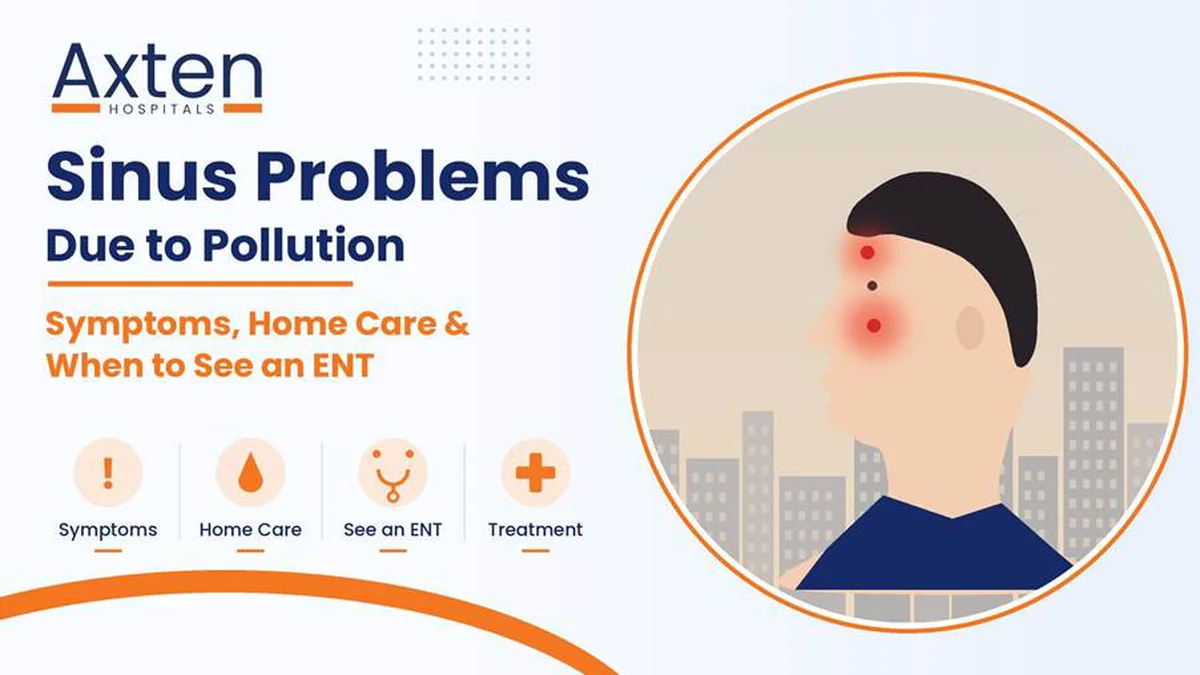
Every winter, as the AQI in Delhi NCR climbs, ENT clinics fill up with the same complaint: a nose that stays blocked, a heavy head and pain around the eyes. A sinus problem due to pollution is very common, and most of it settles with simple care. But when it keeps coming back, or lasts for months, it needs an ENT doctor's attention.
What are sinuses, and how does pollution affect them?
Sinuses are small, air-filled spaces in the bones of your face, around the nose, cheeks, forehead and eyes. They are lined with a thin layer that makes mucus, which normally drains into the nose.
Polluted air carries tiny particles (PM2.5 and PM10), smoke and gases. When you breathe them in, the lining of the nose and sinuses gets irritated and swollen. The small drainage openings get blocked, mucus collects, and it can get infected. This is called sinusitis.
Symptoms of a sinus problem due to pollution
-
Blocked or stuffy nose, often on and off through the day
-
Thick yellow or green discharge from the nose, or mucus dripping down the throat
-
Pain or pressure around the cheeks, eyes or forehead
-
Headache that feels worse when you bend forward
-
Reduced sense of smell or taste
-
Cough, especially at night, and a sore throat in the morning
-
Feeling of fullness in the ears, or tiredness
A blocked nose due to pollution alone usually improves when the air clears or you stay indoors. If the symptoms stay even on cleaner days, sinusitis is more likely.
Is it a cold, pollution irritation or sinusitis?
These can feel alike. This table shows the usual differences. Only an examination can confirm the cause.
| Type | What it usually looks like |
|---|---|
| Common cold | Runny nose, sneezing, mild fever. Gets better in 7 to 10 days |
| Pollution irritation or allergy | Sneezing, watery nose, itchy eyes. Worse on high-AQI days, better indoors |
| Acute sinusitis | Blocked nose, thick discharge, facial pain. Lasts more than 10 days, or gets worse after first improving |
| Chronic sinusitis | Blocked nose, poor smell, facial heaviness for 12 weeks or more, despite treatment |
Home care for mild sinus symptoms
-
Saline rinse: wash the nose with a saline (salt water) spray or rinse once or twice a day. Use sterile or boiled and cooled water.
-
Steam: breathe in steam from a bowl of hot water for 5 to 10 minutes. Keep children away from hot water.
-
Drink enough water so the mucus stays thin and drains easily.
-
Wear an N95 mask outdoors on high-AQI days. Cloth and surgical masks do not filter fine particles well.
-
Keep indoor air cleaner: close windows during peak smog hours, use an air purifier if you have one, and avoid incense, mosquito coils and smoking indoors.
-
Sleep with your head slightly raised to help drainage at night.
-
Don't overuse decongestant nasal sprays. Using them for more than 3 to 5 days can make the blockage worse.
-
Don't start antibiotics on your own. Most sinus problems are not bacterial.
When to see an ENT doctor
See an ENT specialist if symptoms last more than 10 days, get worse after first getting better, or come back 3 to 4 times a year. Also see a doctor if your nose stays blocked for weeks, your sense of smell is going, or the blockage, bleeding or pain is only on one side.
Get help now: Go to a hospital emergency the same day if you have swelling or redness around the eye, double vision, a severe headache with a stiff neck, high fever, or confusion. These can mean the infection is spreading.
How sinus problems are treated
Medicines
Most people get better with medicines. Your doctor may advise saline rinses, a steroid nasal spray to reduce swelling, anti-allergy medicines if allergy is part of the problem, and antibiotics only if a bacterial infection is likely. Steroid sprays work slowly, so use them as advised for a few weeks.
Tests
If symptoms keep coming back, the ENT doctor may look inside your nose with a thin camera (nasal endoscopy) in the clinic. A CT scan of the sinuses shows which sinuses are blocked and whether there are polyps or a bent septum.
Surgery for chronic sinusitis
Chronic sinus surgery is considered when proper medicines for about 12 weeks have not helped, when there are nasal polyps, or when repeated infections affect daily life.
-
FESS (Functional Endoscopic Sinus Surgery): the surgeon uses a thin endoscope through the nose to open the blocked sinus drainage paths. There is no cut on the face. Read more about FESS surgery.
-
Septoplasty: straightens a bent nasal septum that blocks breathing or drainage. It is often done along with FESS.
-
Polyp removal: nasal polyps are removed during FESS.
The ENT surgeon decides the right procedure after the endoscopy and CT scan. Not everyone with sinusitis needs surgery.
FESS surgery: recovery and cost
FESS is usually done under general anaesthesia. Many patients go home the same day or the next morning. A blocked feeling, mild bleeding and some discomfort are normal for the first week. You will use saline rinses and visit the doctor for cleaning of the nose. Most people return to desk work in about a week, while full healing takes a few weeks.
FESS surgery cost in Delhi depends on how many sinuses are involved, whether septoplasty is added, the type of anaesthesia and the room you choose. At Axten Hospitals, you get your final surgery price in writing before admission, with what's included clearly listed.
Keeping your sinuses healthy in pollution season
-
Check the AQI before going out, and avoid outdoor exercise on very poor days
-
Use a saline spray after coming home from heavy traffic or smog
-
Drink water through the day, even if you don't feel thirsty in winter
-
Treat allergies early, and don't smoke
-
See an ENT doctor if symptoms keep returning every winter
Common questions
Can pollution cause sinusitis? Yes. Pollution irritates and swells the lining of the nose and sinuses. This can block drainage and lead to sinusitis, especially in people with allergies or a bent septum.
Does a sinus problem go away on its own? Mild cases often settle in 1 to 2 weeks with home care. If symptoms last longer, keep coming back or are severe, see an ENT doctor.
Is FESS surgery painful? Most people feel blockage and mild discomfort rather than strong pain. The doctor gives pain relief, and it usually eases within a few days.
Can sinusitis come back after surgery? It can, especially with allergies or polyps. Regular saline rinses, sprays as advised and follow-up visits lower the chance.
How much does FESS surgery cost in Delhi? It depends on the extent of surgery and what is included. Ask for a written final price before admission so there are no surprises.
Have questions or want to see a specialist? For appointment and queries, call 8156929292. AXTEN HOSPITALS - HONEST SURGERY, HONEST CARE.