
Health insights
Varicose Veins: Symptoms, Causes and Laser (EVLA) Treatment
Learn what causes varicose veins, which symptoms matter, how laser (EVLA) treatment works, recovery time and when to see a vascular surgeon.
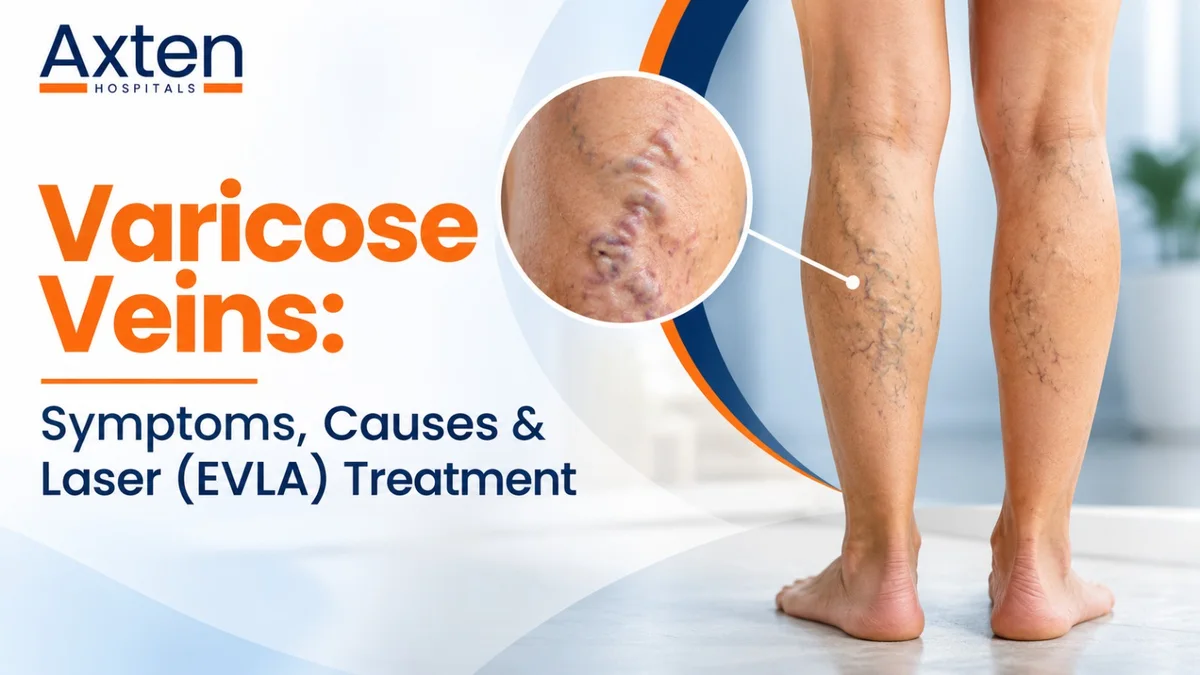
Twisted blue or purple veins on the legs leave many people wondering whether it's just about looks. For some, it mostly is. For others, varicose veins bring aching, swelling and skin changes that get worse with time.
What are varicose veins?
Veins carry blood back to the heart. In the legs, that means working against gravity, with tiny one-way valves stopping blood from sliding back down. When these valves weaken, blood pools, and the vein stretches, bulges and twists. That's a varicose vein.
You're more likely to get them if you have a family history, are a woman or have had pregnancies, stand or sit for long hours, are overweight, are getting older, or have had a blood clot in the leg before. Spider veins are different. They're tiny red or blue lines on the skin, usually harmless and mostly a cosmetic concern.
Symptoms
-
Dark purple or blue veins you can see and feel
-
Aching, heavy or tired legs, especially by evening
-
Swelling in the ankles and feet
-
Burning, throbbing or cramps
-
Itching around the veins
-
Relief when you raise your legs
In later stages you may see brown or dark skin around the ankle, dry and itchy eczema-like skin, hard and tight skin, or slow-healing sores near the ankle.
When to see a doctor
See a vascular surgeon if the veins cause pain or swelling, if the skin around them is changing colour or breaking down, or if home care hasn't helped. Don't wait for an ulcer to form. Treatment is easier early.
Get help now: Go to the emergency room now if a varicose vein bleeds and doesn't stop with firm pressure, if one leg suddenly becomes swollen, painful and warm, or if you have chest pain or breathlessness. These can be signs of a bleeding vein or a blood clot.
How it is diagnosed
The doctor will look at your legs while you stand. The key test is a venous duplex ultrasound, which shows which valves are leaking and how blood is flowing. It takes about 20 to 30 minutes and helps plan treatment.
What you can do at home
These steps can ease symptoms, but they don't remove varicose veins that are already there.
-
Walk daily. Moving your calf muscles pushes blood upward.
-
Raise your legs above heart level for 15 to 20 minutes, a few times a day.
-
Change position often if you stand or sit for long periods.
-
Keep a healthy weight.
-
Wear compression stockings if your doctor advises them. They need to be the right size and strength.
Treatment options
Laser treatment (EVLA)
EVLA stands for endovenous laser ablation. It works like this:
-
The leg is cleaned and numbed with local anaesthesia.
-
Guided by ultrasound, the doctor passes a very thin tube (catheter) into the faulty vein through a small puncture.
-
A laser fibre inside the tube gives off gentle heat as it is slowly pulled back. The heat closes the vein wall.
-
The closed vein is gradually absorbed by the body, and blood flows through healthy veins instead.
It usually takes 30 to 60 minutes, with no large cuts or stitches. You can walk soon afterwards and often go home the same day. Guidelines such as those from NICE in the UK suggest heat-based closure (laser or radiofrequency) as the first choice for suitable patients.
Other options
-
Radiofrequency ablation: works like laser but uses radio waves for heat.
-
Foam sclerotherapy: a medicine foam is injected to close the vein. Useful for smaller or leftover veins.
-
Medical glue closure: a special glue closes the vein without heat.
-
Surgery (ligation and stripping): the vein is tied off and removed through small cuts. Used less often today, but still right for some patients.
Your surgeon picks the method based on your scan, the size of your veins and your general health.
Recovery after laser treatment
-
Walk soon after the procedure and every day after. It helps healing and lowers the risk of clots.
-
You may need compression stockings for a period your doctor will tell you.
-
Most people return to light work in 1 to 3 days.
-
Avoid heavy lifting, hard exercise and long flights for as long as your doctor advises.
-
Bruising, tightness or a pulling feeling along the treated vein is common and fades over a few weeks.
Call your doctor if you have severe pain, increasing swelling, fever, or redness spreading along the leg.
Risks and limits
Laser treatment is safe for most patients, but no procedure is free of risk. Possible problems include bruising, skin discolouration, numbness in a small area, inflamed veins and, rarely, a blood clot. Varicose veins can return, or new ones can form, because the underlying tendency remains. Treatment is usually put off during pregnancy. Stockings and leg elevation are used, and treatment waits until after delivery.
Will insurance cover it?
Many policies cover varicose vein treatment when it is medically needed, for example for pain, swelling, skin changes or ulcers. Treatment for looks alone is usually not covered. Check your policy, and ask the hospital's insurance desk.
Common questions
Can varicose veins go away on their own? No. They don't go away by themselves, and they often worsen slowly. Early care can ease symptoms and protect the skin.
Are they dangerous? Often they're not. But they can lead to skin damage, ulcers, bleeding and inflamed or clotted veins, so painful or changing veins should be checked.
Is laser treatment painful? The leg is numbed, so you should feel little during the procedure. Some people feel tightness or mild pain for a few days afterwards.
Can I exercise? Yes. Walking, cycling and swimming are good choices. Ask your doctor before heavy weight lifting.
Have questions or want to see a specialist? For appointment and queries, call 8156929292. AXTEN HOSPITALS - HONEST SURGERY, HONEST CARE.